
Zachary Weaver
Staff Writer
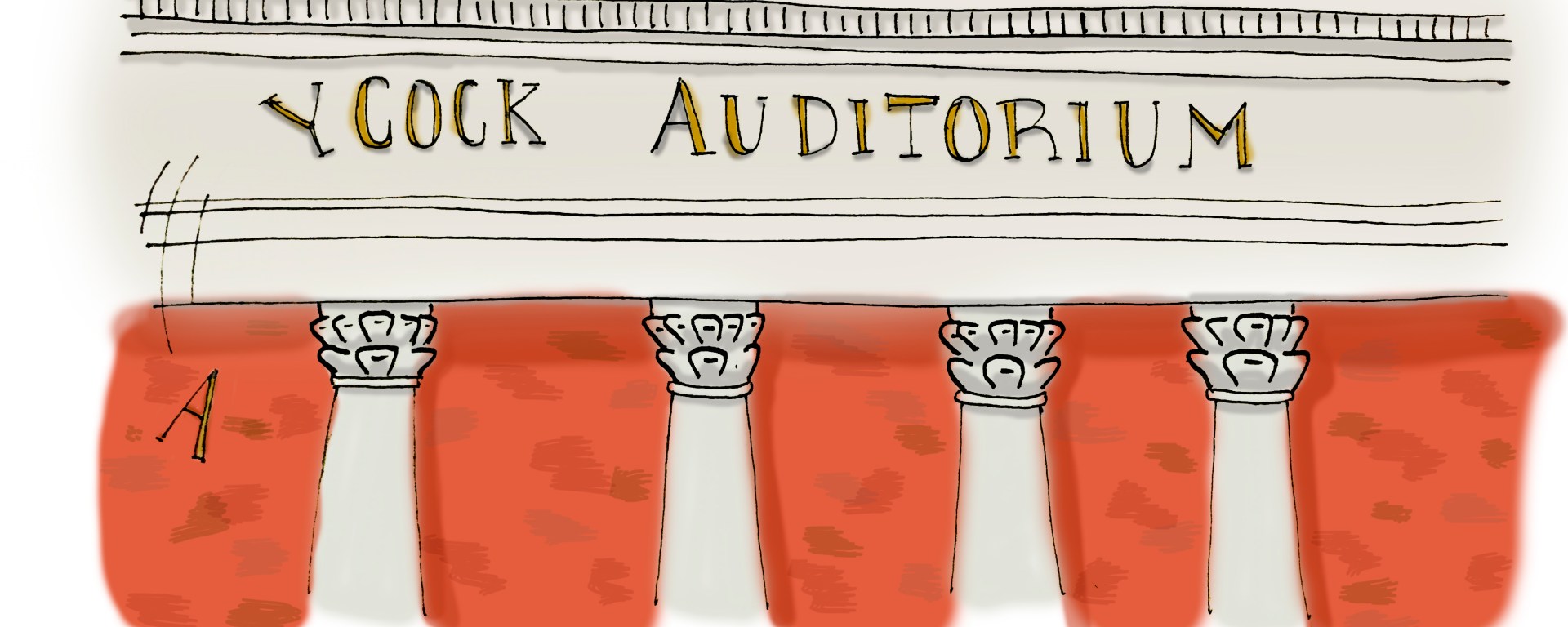
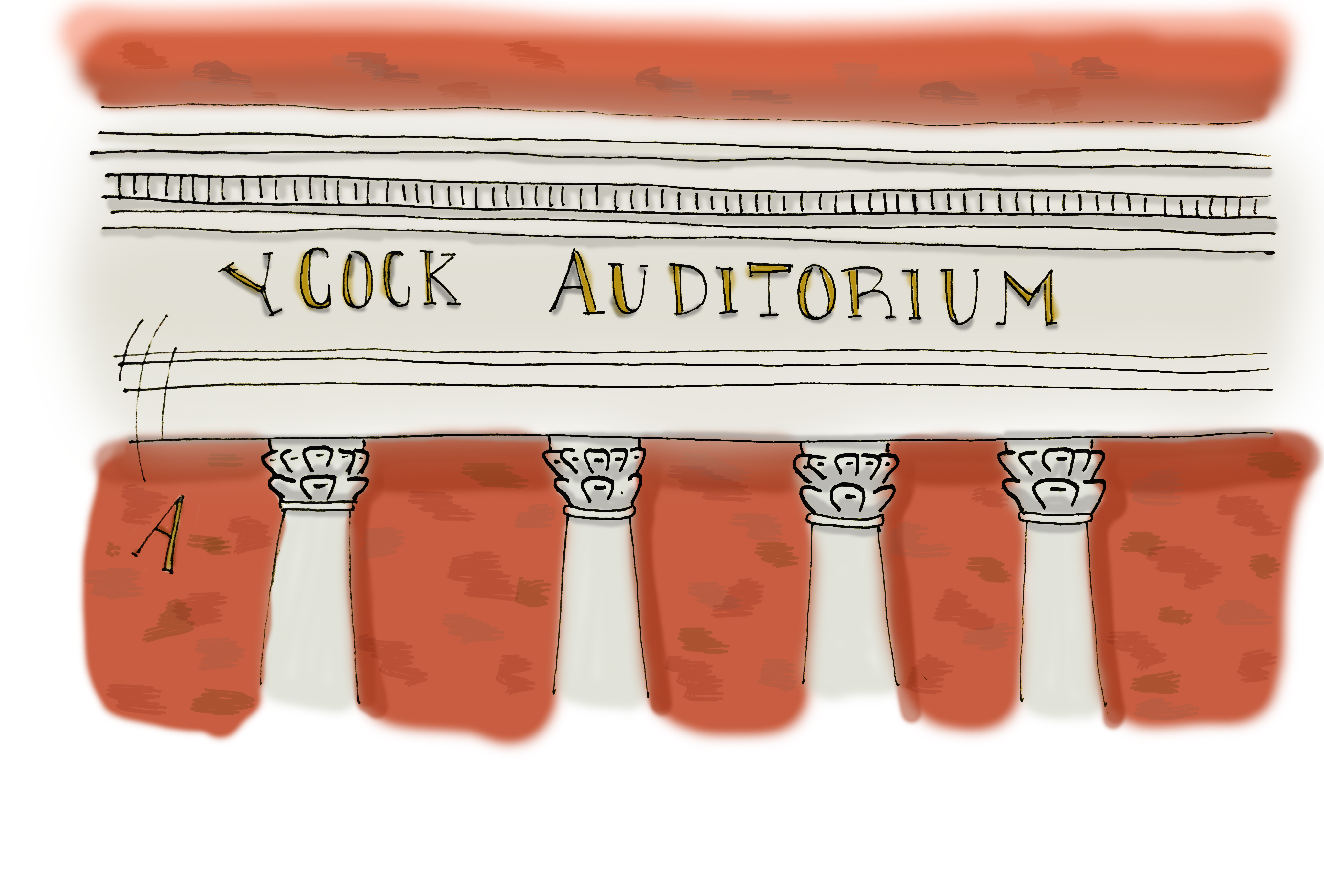
On Thursday, Feb. 18, the UNCG Board of Trustees voted to remove former NC Governor Charles B. Aycock’s name from UNCG’s Aycock Auditorium.
The decision came after more than a year’s worth of discussion. Back in 2014, the Board of Trustees created an ad hoc committee for the purpose of issuing detailed reports on the matter of the Aycock Auditorium’s renaming. The ad hoc committee was charged to analyze the historical context of Aycock and UNCG, examine the precedence in the state and beyond for renaming buildings, engage the campus in dialogue and, lastly, make an official recommendation of action.
Aycock has historically been regarded as an admirable figure, helpful to education and the community at large. Called the ‘Education Governor’ for his work in supporting education in North Carolina, he has been honored by building and street names, and even an annual luncheon.
He was endeared to UNCG in 1904 when he raised money to rebuild a dormitory that had burned down. This building, dubbed Spencer Residence Hall, still stands and serves as housing for Lloyd Honors students.
The Aycock Auditorium was named in 1928, 16 years after Aycock’s death. During the Director’s proceedings he was hailed as “the great apostle of public education in North Carolina” and as a friend to the school in times of prosperity and crisis.
His acclaim has cooled and been reexamined in the last decade, as Aycock’s racial views and politics have gained more prominence in public consciousness. In 1898 the Democrats seized power from a Republican/Populist alliance, known as the Fusionists, which relied on black voters for their power.
This was accomplished by utilizing racial rhetoric and violence, in some cases removing representatives by armed force and firing upon black citizens in the streets. Once they were back in power Democrats campaigned for a constitutional amendment to disenfranchise black voters.
Aycock campaigned in 1900 for both the amendment and for his election as governor. During this time he stated that “we must disfranchise the negro. . . . To do so is both desirable and necessary,” as quoted in the Ad Hoc Committee’s historical statement.
The Ad Hoc committee described Aycock as having “a progressive platform, the centerpiece of which was improving public education — but he linked that program to the need to eliminate
blacks from the electorate.”
The amendment was passed, and Aycock became governor alongside it. Many black citizens lost their rights to vote under a combination of voter literacy tests and Grandfather Clauses.
During his time as governor Aycock made good on his campaign promises, improving white teachers’ salaries and teaching standards, lengthened the school term, adopted a textbook law, and increased appropriations for all educational levels.
His previously-acclaimed work in educational promotion has come under scrutiny, which has found that he disproportionately favored white groups and underfunded minority schools. In particular, he offered only vocational classes to black students. He has been cited as offering three times as much money per white student than black.
He was also an advocate of white supremacy, and commonly spoke about the ‘Negro problem.’
“He wasn’t just a person of the times,” UNCG trustee Randall Kaplan said, as quoted in a Greensboro News & Record Article, “He was a maker of them.”
Opinions range over the merits and drawbacks of renaming buildings that honor morally-questionable public figures.
Those against the renaming claim that renaming is akin to whitewashing history, attempting to make the events like they had not happened. They also point to the positive contributions of Aycock, as most historians will acknowledge that he was beneficial to North Carolina’s education system.
Those who support the renaming counter these claims by pointing out that his educational achievements were slanted by race, on top of his regressive actions against black voters.
The committee and the chancellor have demonstrated their support for the change citing multiple counter-arguments for arguments made by those who do not agree with the change.
In an email announcement sent out by the chancellor’s office, Chancellor Gilliam wrote, “Symbolically, removing the name connotes change. It says that significant American institutions are more inclusive…”
Supporters have also stated that history is not being rewritten, nor is it trying to be made that racism never occurred. The debate is whether honor should be bestowed on a person whose racial views are so regressive in modern light.
It has also been pointed out that honoring Aycock may sanitize history more than renaming a building would. If one were to look upon Aycock Auditorium and not know the namesake, then they may conclude that this was a person to be admired.
Members of Aycock’s family have spoken out against the renaming, considering it to be a negative statement that ignored the good that Aycock had done. Trey Aycock, a descendant of the former governor and Greensboro attorney, called the renaming “political correctness gone amok” in the News and Record article.
UNCG has not been alone in renaming buildings that previously bore Aycock’s surname. East Carolina University, who renamed a dorm ‘Legacy Hall’ and Duke University, who renamed a dorm to East Residence Hall and later announced its demolition for a new dorm, precede UNCG’s debate.
In the chancellor’s email announcement Chancellor Gilliam stated that the name “doesn’t comport with who we are as Spartans. It is inconsistent with our values and it doesn’t properly support our mission.”
Conversely, Clemson University refused to change the name of Tillman Hall, named for a South Carolina governor who similarly supported an amendment which would strip voting rights from black citizens. Students have demonstrated for a change in the name, including letter-writing campaigns and protests.
The Board of Trustees has not yet decided on a replacement name and has not set a date for when a name may be chosen; however, the board requested that Chancellor Gilliam form a committee to oversee the renaming process.
 THE CAROLINIAN