

Brian Hornfeldt
Arts and Entertainment Writer
Dante Alighieri was an Italian poet of the late 13th and early 14th centuries who is most famous for his epic poem La Commedia Divina (The Divine Comedy). Dante’s poem is regarded as one of the greatest works ever written, leaving theological and artistic ripples across many cultures.
The Divine Comedy follows Dante as Virgil, the Roman poet who wrote the Aeneid, guides him through hell and into purgatory and paradise. Encountering sinners in hell, challenges in purgatory, and salvation in paradise, Dante tells a tale spanning three different canticles, each subdivided into respective cantos, which serve as the equivalent of chapters in a book.
Dante began work following his expulsion from Florence, Italy, in 1302. The story came as a direct response to this exile, as Dante used his experience during his time roaming Italy as inspiration for his fictional travels to hell and heaven.
The Divine Comedy has inspired many artistic endeavors since its first print publication in 1472 in Foligno, Italy, in addition to its influence on long-held theological understandings of purgatory and hell with specific punishments for the different sins. Two recent and notable instances in artistic media are Hozier’s 2023 album Unreal Unearth and the Korean video game Limbus Company.
In an interview with Rolling Stone, Hozier said about his connection between Dante and Unreal Unearth, “It starts with a descent and I’ve arranged the songs according to their themes into nine circles, just playfully reflecting Dante’s nine circles and then an ascent at the end.” Each song in the album has clear parallels that refer to each of Dante’s circles in hell and their corresponding sins.

Songs such as “Francesa” are more literal references to the work, retelling the story of Francesca da Rimini, who was sentenced to torment in the second circle of hell for her tragic love story. Francesca and her lover Paolo Malatesta had a secret extramarital affair in their mortal lives, ending with their murder at the hands of Francesca’s husband, Giovanni. They are caught within the winds of an eternal hurricane as punishment for their lust. It constantly blows them around as a reminder of the tempestuous feelings clouding their judgment and leading to rash decision-making. However, Dante portrays these lovers and many other sinners in a sympathetic light, allowing readers to feel pity and sorrow for their predicament.
Hozier writes this song from the perspectives of Francesca and Paolo and shows the strength of their love. While they are sent to eternal torment in hell, they are resilient and accepting of their punishment. It means more time with their love, as they express in the lyrics:
“My life was a storm since I was born
How could I fear any hurricane?
If someone asked me at the end
I’d tell them put me back in it
Darlin’, I would do it again
If I could hold you for a minute”
The lovers disregard eternal punishment, as their love for one another is worth it.
Other songs, such as “First Light,” are less literal than their counterparts in Dante, leaving the listener to construct their interpretation of the piece. The song closes the album and ends the journey by suggesting Dante’s emergence from the pits of hell and entry back into the overworld as he approaches purgatory.
South Korean game company Project Moon has recently published a video game titled Limbus Company. The game’s protagonist, Dante, travels through the City with his band of sinners, searching for golden boughs, which appear in the Aeneid. The sinners are based on historical or literary figures, such as Don Quixote, Ishmael from Moby-Dick, and Ryoshu from the Japanese short story “Hell Screen.”
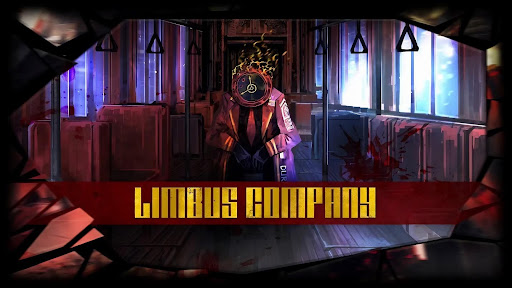
Each gameplay segment is broken into cantos, mirroring The Divine Comedy’s poetic structure. Sinners retrieve the golden boughs, which leads to restitution of their morality and repentance of their past sins. The game’s Dante rides aboard Mephistopheles, a bus that transports himself and the Sinners through the city. Aboard this bus are Charon, the bus’s operator and driver, and Virgil, who guides the journey and alerts the crew to golden bough locations. However, rather than the paternal figure of his poetic counterpart, this Virgil is a cold, self-serving individual who aids in the team’s efforts but only cares for the mission’s success. There is no emotional connection between him and the Sinners or Dante.
Both works demonstrate that Dante’s influence continues to persist in modern culture. Though The Divine Comedy was published over 500 years ago, we can still appreciate the work and the varying interpretations and creations it has inspired.
 THE CAROLINIAN