
Ginny Weaver
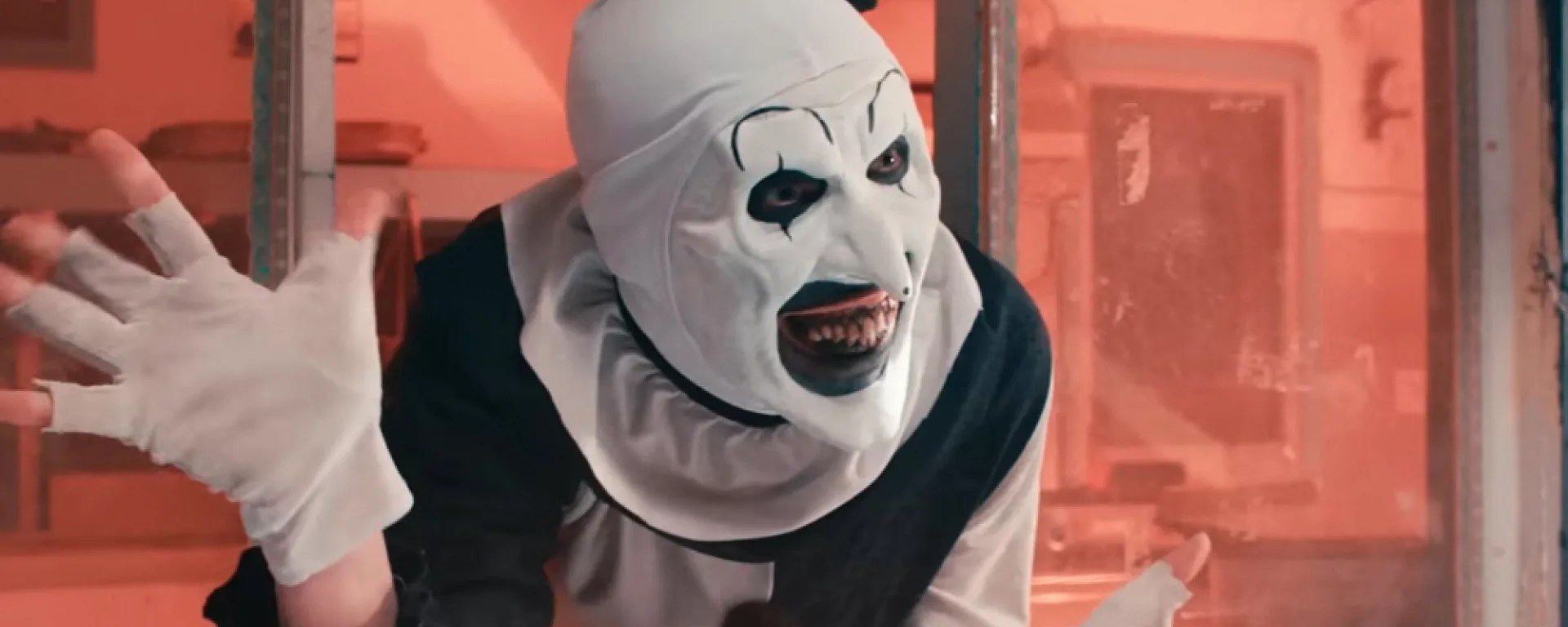
This spooky season, iconic villain Art the Clown tries to get into the Christmas spirit but slips on a blood-soaked banana peel in the writer’s room. Damien Leone’s Terrifier 3 self-consciously erects itself as part of the lineage of classic slashers, yet the dominance of its influences disembowels the film and jeopardizes the future of its franchise.
As the third entry in an infamous series with a rabidly devoted fanbase, Terrifier 3 has big, clown-sized shoes to fill. The series’ first entry, Terrifier (2016), was grimy and unflinching, impressing with its practical effects while failing to build connection to its characters and setting. Its rarest achievement lay in establishing its antagonist, Art the Clown, as a new member of the pantheon of classic horror villains. David Howard Thornton, the man behind the clown makeup, masterfully plays Art as somehow both terrifying and endearing, and he continues to shine in the role in both sequels.
Terrifier 2 (2022) shifted the tenor of the series from nearly plotless gore porn to a character-driven, campy style that has the uniquity and enchanting quality of a classic. Unlike the first film, Terrifier 2 introduced a compelling protagonist, Sienna Shaw, played with aplomb by rising star Lauren LaVera. The sequel’s production quality far surpassed its predecessor’s and recreated much of the visual magic of the 1970s slasher craze, while setting itself apart from the genre in its best moments. Better writing, sets, and acting made the sequel vastly more engaging than the original. Sienna, dressed like a comic book Valkyrie, wielding a magical sword against a demonic clown, brought the film into unique territory within its genre. The elements that Terrifier 3 carries over from Terrifier 2 – such as its focus on heartfelt characters and its 1970s-styled cinematography – are what work best in it.
Visually, Terrifier 3 stuns. Leone’s efforts to resurrect the style of 1970s slasher cinematography succeed even better here than in Terrifier 2. The third film’s seasonal setting is a well-advised shift from the Halloween setting of the first two films: Christmas décor provides a perfect opportunity for colorful lighting, shocking contrasts, and subversive visual references.
Terrifier 3’s practical gore effects impress at every kill. Reports that moviegoers have fainted or vomited during screenings of Terrifier 3 are believable. Although it’s hard to focus on the artistic aspect of Art’s kills while holding down hastily-consumed popcorn, the film’s gore serves as a vessel for virtuosic practical effects – a craft nearly extinct outside indie films, even in horror. Practical effects are always better than uncannily smooth CGI at depicting fleshly visuals, and Terrifier 3 upholds the series’ reputation for sickening but stellar gore.
On a line-by-line level, Terrifier 3 keeps up with the improved writing of Terrifier 2, but on a larger scale, writing is its fatal flaw. Its misuse of the supernatural is among its most frustrating failures. The franchise’s previous films left no doubt that Art the Clown and the events surrounding him were supernatural but established no specific religious grounding for the series. This ambiguity allowed for flexibility and contributed to the story’s mystique. Terrifier 3 sacrifices this potent ambiguity by revealing that the supernatural situation at hand is just the usual supernatural horror conflict between agents of the Christian God and Satan, stooping into the evangelizing folk Catholicism of The Exorcist (1973) or the moribund Conjuring-verse. Going beyond mere symbols, Terrifier 3 has its characters recreate some of the most famous moments from the Christian Gospels, and the audience knows that the religiosity of these moments is sincere because of straightforward exposition earlier in the film.
Terrifier 3 also makes little effort to build on the successes of its forebear’s story, instead introducing a new, uncompelling, and mostly short-lived cast of supporting characters and ending with one plot development – a development that immediately creates a cliffhanger, not a self-complete film. Terrifier 3 feels like an episode in a high-quality television series.
Terrifier 3 isn’t just following the well-worn grooves of pseudo-Catholic horror – it’s detrimentally indebted to the Scream franchise, too. This influence becomes particularly obvious in its shallow focus on true crime media, which fails to reach beyond what had been accomplished by Scream 4 (2011) or the first season of MTV’s Scream (2015), the latter of which has numerous prominent parallels to Terrifier 3. The limply climactic scenes of Sienna battling Art in Terrifier 3 are direly akin to a mid-movie fight sequence in a Scream film. As a character, the formerly unique Sienna now has far too much in common with two of Scream’s central protagonists, Sidney Prescott and Emma Duval. Of the many loose ends introduced by Terrifier 3, many would seem perfectly at home in a new Scream flick or have already been explored in MTV’s Scream series.
Unoriginal writing, poor plotting, and Conjuring-verse-style folk Christianity bring Terrifier 3 down to the level of the everyday horror flick that Terrifier 2 had so stunningly transcended. These developments seem deeply unpromising for the quality of the Terrifier franchise going forward.
 THE CAROLINIAN