

Bronwen K. Bradshaw, Arts & Entertainment Editor
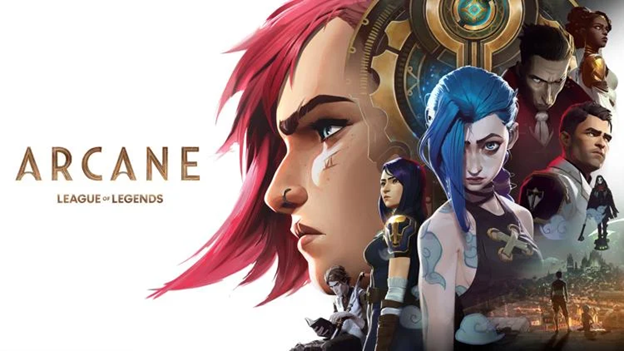
(Image From, REVIEW: ‘Arcane’ an exciting start to League of Legends cinematic universe)
The second and final season of Arcane: League of Legends was released on Netflix this past November and received terrific reviews. Based on the successful videogame League of Legends, the story follows sisters Vi and Powder/Jinx and their roles in the conflict between the wealthy city of Piltover and the undercity, known as Zuan.
Upon watching Arcane, I concluded that the show is a perfect example of how to write female characters well. All the women in the show have agency regarding their goals and progress in the plot through many of their actions.
For example, Mel is a strong, powerful woman who is a council member of Piltover. What makes her a dynamic character is her agency. Many tropes in film and television have strong female characters but do not usually have their own sense of purpose in not being involved with a man or centered around their relationship with men. Even when Mel starts a romantic relationship with Jayce, she does not lose control of her power or authority and is often seen helping Jayce with decisions made by the council. Mel uses everything at her disposal to reach her goals. Mel is traditionally beautiful, but that does not diminish her agency as a character, and it is not her only defining trait. Arcane does great with their development of female characters and their personality, which makes their beauty complex and not shallow.
Arcane takes the trope of the “action girl” to a new level that makes sense to the female characters within the story. For example, the character of Ambessa is a strong warlord in pursuit of reuniting with Mel, her daughter. She is tall and strong and takes on a more masculine-driven role. However, her leadership role does not negate her femininity. Instead of simply writing a masculine character and making that character female, the show showcases many instances of their strong female characters and a spectrum of femininity. When Ambessa argues with Mel, she says her purpose is to protect her family, which is a maternal characteristic. Their relationship balances each other, having Mel be a strategic and methodical presence while Ambessa is brutal and
We see another thing: Jinx, who evolves from the Manic pixie dream girl archetype as seen in the game to a spunky, complex, and brilliant character in Arcane. In the game, Jinx’s character is on the surface a beautiful, eccentric woman whose goal seems to be just blowing stuff up. Her character is fleshed out in arcane, providing her backstory of Powder. Due to the actions she made when she was younger, killing her friends and Vander, voices and visions of her past torture Jinx, her guilt personified. Jinx is destructive, but you can’t help rooting for her as a watcher of the show. Instead of just making Jinx a “Harley Quinn” type character, as seen in the video game, she has agency in the show, often carrying out actions that continue the plot. Something great about Jinx and the other characters is that she is not dependent on a male character like the “manic pixie dream girl” stereotype often does. Even in her relationship with her stepfather, Silco, she is never truly controlled or compelled to do his bidding. Silco nurtured her talents and gave her a home, but in the end, he is not the one who made her into the person she becomes; instead, Powder’s actions and guilt turn her into the Jinx we know.
Vi is what you would call the “action heroine” trope. She is strong, determined, and not afraid to put up a fight. But with that strength, there is an inner strength that fuels it. Vi is not portrayed as someone whose strength and power come naturally to them, nor does she win battles effortlessly. Vi can be seen knocked down numerous times by other characters, but that does not make her weak; it instead proves how strong she is, that she trains and learns from her past mistakes and keeps going. Even in the first altercation, Vi takes a wicked punch and is knocked to the ground. She earns strength, rarely seen in an “action girl” character. Vi’s search for her sister and her desire to save the undercity makes her a true heroine. She is not strong for the sake of being strong, she is strong because she has a duty to herself and her sister to protect those in need.
What makes these female characters so great is the variety of female characters within the story. When you have multiple female characters within a story, it always shows a spectrum of masculine and feminine attributes. Mel is feminine and uses her power of influence to reach her goals. Savika takes on a masculine role, a loyal right hand to Silco and the revolution for Zuan. These complex characters make the show and have some of the best female-written characters I have seen in a long time.
 THE CAROLINIAN