
Megan Guzman, Opinions Editor

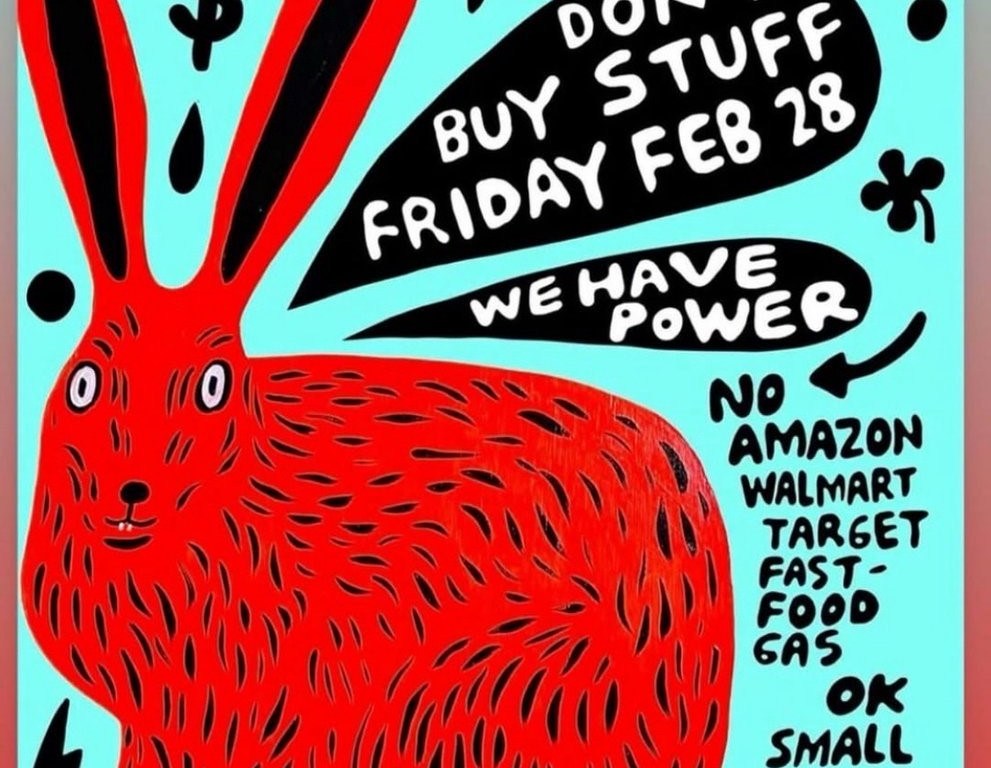
Since their inception, social media apps have hosted conversations about political events and social justice movements, with many young people crediting apps like TikTok with increasing their awareness of the genocide in Palestine and police brutality. If you have politically aware friends, you may see infographics explaining various social issues, encouraging you to repost and share to spread the word, or galvanize you into action. For instance, last week many social media users encouraged their followers to participate in a one-day economic “blackout” of large chain stores and banks to show their disapproval of “the system.” I personally saw about twenty of my mutual friends posting about the blackout to their Instagram stories, and even my mom asked me if I was participating. Initially, this blackout reminded me of the trend in 2020 of posting black squares to support Black Lives Matter, which drew criticism for drowning out important information regarding protests and for being an example of performative activism. Do these one-day blackouts work? And do these infographics contribute to meaningful social change?
The Feb. 28 economic blackout was organized by a relatively new organization called The People’s Union USA (whose website is currently inaccessible on UNCG Wi-Fi because of cybersecurity concerns). A self-described apolitical organization, The People’s Union USA was founded by John Schwarz, a Chicago meditation teacher, and has raised over $95,000 in donations. Interestingly, Schwarz was arrested in 2007 for dissemination of voyeuristic material, which means he spread a photograph, video, or image of a person without their consent.
The People’s Union USA website lacks specificity regarding their ultimate goals, only stating they are fighting “corruption, politicians, and industries” that have exploited American workers. Unlike a labor union, which focuses efforts on one place of employment or sector, The People’s Union seeks to organize Americans against an amorphous conglomeration of billionaires, corporations, and the government, demanding to eliminate federal income tax, end price gouging, and instating healthcare for all. They plan to have multiple economic blackout days coupled with targeted two-week boycotts of companies like Amazon, Nestle, and General Mills.
Historical boycotts, like the Montgomery bus boycott and the Schenley grape boycott, required immense amount of social organization and community support. The Black community of Montgomery, for example, had to work together to provide alternative forms of transportation. Additionally, over 90 percent of Black residents in Montgomery stayed off the buses, contributing to the severe economic impact to the bus companies. The Schenley grape boycott, organized by the National Farm Workers Association, lasted over six months and relied on support from hotel and restaurant worker unions to impact Schenley’s bottom line.
Typically, successful boycotts organized by the left accompany strikes, are heavily supported by the community, last for multiple months, and are targeted. Lastly, they are difficult. This stands in stark contrast to the one-day economic blackout, which lacks specificity, aim, duration, and is incredibly easy for the average American to participate in. To participate, you literally have to do nothing. A single day of no spending did not materially impact any large corporations, and the environment that spread the boycott, social media, breeds overconsumption in general.
These inherent conflicts point to how unserious a one-day boycott is and represents the performance of leftist activism. Real activism takes work and requires communities to come together in person and work through difficult situations. It requires a succinct political ideology or common social belief and a specific target. Social media activists must understand that activism cannot end at raising awareness and must continue through to meaningful change. This means connecting with your local community to attend events, disseminate flyers, attending city council meetings, and talking to your neighbor. Only then can we build the necessary support channels to support something like a boycott, which is just one facet of a larger social movement.
 THE CAROLINIAN