
Sergio Guerra, Sports Editor/Photographer
(Image from USA Today)
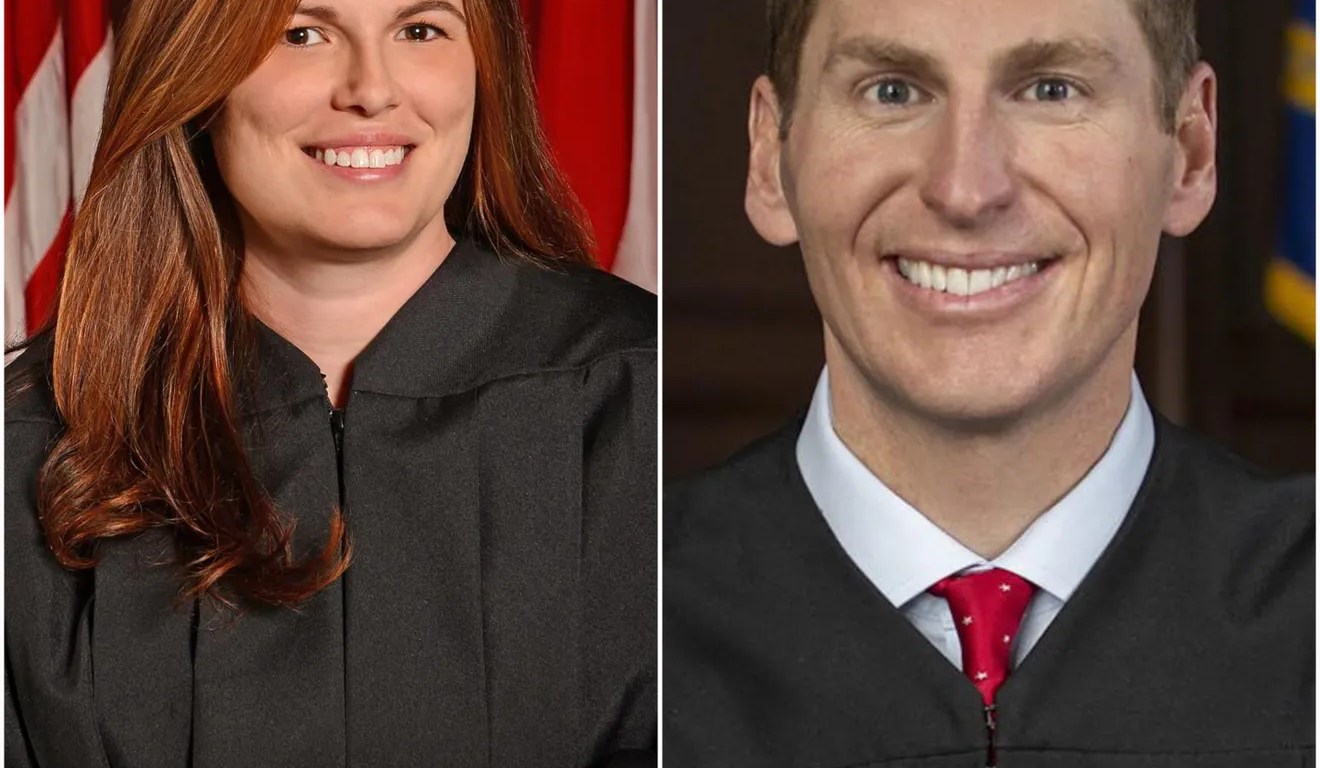
14 APRIL 2025 – The race for a seat on the North Carolina Supreme Court remains a fiercely contested legal battle between Democratic incumbent Allison Riggs and Republican candidate Jefferson Griffin. The 2024 election saw Allison Riggs win by a narrow margin of 734 votes, a result validated through multiple recounts. However, Jefferson Griffin – who serves on the North Carolina Court of Appeals – has attempted to discard over 65,000 votes in his bid to overturn the election.
As previously reported by The Carolinian, Griffin’s efforts to disqualify votes primarily target three groups. The first group consists of voters who allegedly did not provide all the required voter registration information, such as complete driver’s license numbers or the last four digits of their Social Security number. The second group is overseas or military voters who did not include photo identification with their ballot, despite this not being a requirement prior to the election. Lastly, Griffin is seeking to disenfranchise U.S. citizens who have never resided in the United States.
The legal dispute over these votes has faced several challenges at various levels of North Carolina’s judicial system. On Friday, April 11, the North Carolina Supreme Court conducted a hearing that ruled to reinstate 60,000 votes due to clerical errors while also siding with Griffin regarding the validity of overseas and military voters. According to NC Newsline, the ruling “partially upholds and partially reverses a 2-1 Court of Appeals ruling issued April 4.” That earlier Court of Appeals ruling agreed with Griffin’s position and aimed to discard over 60,000 votes, though it would have allowed voters 15 business days to address any issues with their ballots.
The April 11 ruling by the NC Supreme Court reverses part of the Court of Appeals’ decision by stating that votes with incomplete registration information will still be counted. The NC Supreme Court affirmed that “mistakes made by negligent election officials in registering citizens who are otherwise eligible to vote cannot be the sole basis for depriving a citizen of his or her right to vote.” The April 11th ruling requires the curing of ballots from military and overseas voters who did not provide photo identification along with their ballot, which, according to The New York Times, one justice estimated to be between 2,000 and 7,000 voters. However, the challenged voters will now have 30 days to address these issues instead of 15.
The State Supreme Court ruling also supported Griffin’s claims to disqualify the final group of affected voters – those who have never lived in North Carolina. This decision directly contradicts a 2011 bipartisan state law that allows these voters to participate in North Carolina elections.
The North Carolina State Board of Elections website was updated on April 14 and states that the court’s decision is currently being implemented, and that “the State Board of Elections will provide detailed instructions to the affected counties and voters on how to comply with the decision.”
Sources:
Medina, E. & Corasaniti, N. (11 April 2025). Thousands of voters must verify information in contested election, N.C. Supreme Court rules. The New York Times. https://www.nytimes.com/2025/04/11/us/north-carolina-griffin-riggs-election-votes.html
NC State Board of Elections. (14 April 2025). Information for voters challenged in election protest. Retrieved April 11, 2025, from https://www.ncsbe.gov/information-voters-challenged-election-protest
Schofield, R. (11 April 2025). North Carolina Supreme Court issues order in Riggs-Griffin case. NC Newsline. https://ncnewsline.com/2025/04/11/north-carolina-supreme-court-issues-order-in-riggs-griffin-case/
 THE CAROLINIAN