
Bronwen K Bradshaw, Arts & Entertainment Editor
Halloween and the spooky season are upon us. To prepare for the festivities, I have been catching up on and rewatching beloved films that capture the spooky holiday season. In doing so, I decided to rewatch the 2009 stop-motion classic, Coraline, directed by Henry Selick. I was 7 years old when the film was released in theaters. The film frightened me but also enticed me nonetheless with its vibrant colors and impactful storyline. I will never forget the first time that I watched Coraline enter the bright blue, slinky-like passageway into the other world—something I wish I had in my own home growing up. Now, as an adult, I have decided to rewatch the film, looking at it through a different lens from when I did as a child. And what I discovered is that good stories like this one can operate on multiple levels of meaning, never quite what they initially seem.
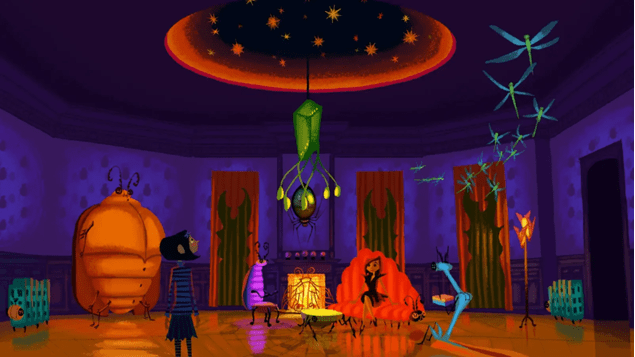
The artistry of the filmmaking is undeniable. The film was created and produced by the notable stop-motion studio Laika, also known for its work on ParaNorman and The Boxtrolls. According to Laika’s website, Hidden Worlds, Coraline was “the first stop-motion film to integrate visual effects and 3D-printing rapid prototype technology into traditional stop-motion production.” Regarding the main character, Coraline, production created over 28 different Coraline puppets for the film, each capable of over 207,336 possible facial expressions. The film’s set designers created over 130 sets, built across 52 stages. The film took almost three and a half years to make, two of which were in pre-production and 18 months for shooting. Suffice it to say; the film’s creative ingenuity is abundant.
The film begins with Coraline and her mother and father moving into a new home, The Pink Palace Apartments, away from Coraline’s friends and life in Michigan. Coraline is bored with her living situation and seeks attention from her distant mother and father. For instance, Coraline tells her mother that she had almost fallen down a well and died, to which her mother replies, “That’s nice,” without paying attention to what Coraline is saying. When speaking to her dad, he, too, is glued to his computer screen, giving Coraline useless tasks to keep her occupied while he works. It could be argued that Coraline’s parents are not intentionally neglectful—they are stressed while moving and getting their garden catalog published; but that does not mean they aren’t responsible for caring for Coraline and her needs. Due to their neglect and disinterest in Coraline’s perspective, Coraline seeks attention elsewhere.
Coraline is gifted a doll almost identical to her liking by Wybie, another kid she meets who lives near the Pink Palace. While exploring the home, Coraline stumbles upon a small door. Begging her mother to open it, she discovers a brick wall behind it and nothing more. That night, Coraline follows a mouse to the small door. Instead of brick, a long blue and purple corridor stretches out before her. Intrigued, Coraline crawls through to the other side, finding herself in the same room as before; however, something is different. She enters the kitchen to find her “mother” cooking dinner. Her mother turns around and is revealed not to be her real mother, but her proclaimed “Other Mother,” who has black buttons for eyes and a cheerful demeanor.

The Other Mother is done preparing dinner, a feast beyond any child’s wondrous dreams. Coraline meets her Other Father, who sings a song about her, making jokes and establishing a carefree attitude.
Everything in this other world is like a dream, with Coraline getting whatever she wants: attention, delicious food, clothes, and, overall, excitement and childlike wonder. However, there is something sinister underneath the Other Mother’s hospitality. After showing Coraline what life could be like if she were to stay in the other world, the Other Mother asks Coraline to sew buttons into her eyes. Coraline is obviously frightened and wants to go back home. Coraline tries to fall asleep and enter the real world as she had before, but realizes that, in doing so, she remains in the other world.
She demands to go home which angers the Other Mother. The Other Mother’s body transforms into an elongated, evil form.

She traps Coraline in the other world, in a room along with her other victims, the ghost children.
When Coraline tells her Other Mother no to something she is uncomfortable with, specifically the buttons, her “loving” Other Mother changes her demeanor swiftly. This demonstrates how abusers or those with ulterior motives can shower you with affection and everything you could possibly want, only to exploit your trust and vulnerability to get you to do something you normally would not. Coraline does not give in to the Other Mother’s temptations; however, the ghost children Coraline meets showcase the horrible effects that can happen when power dynamics and abuse are invoked on young children. The three ghost children and Coraline had been unhappy with their lives. Abusers use people’s vulnerable feelings and use them against them. They shower you with love and praise to get something from you.
After defeating the Other Mother, Coraline returns to her real parents with a newfound attitude toward her life, embracing the somewhat boring everyday life. Her real parents, who have been neglectful throughout the film, even started to cheer up. Coraline’s parents help her throw a garden party, and Coraline’s mother buys her the gloves she wanted from the store. In the end, Coraline understands that people are not always what they seem and that, even though things are rough for a moment, they will eventually get better.
I’m not entirely sure that is the moral of Coraline, but I guess you could say that sometimes, things really are too good to be true, and we must be wary when entering a world or situation we do not fully understand. As an adult, I see that the film itself is a masterpiece. When I watched the film as a child, I thought the real parents were horrible and misunderstood Coraline and her feelings. Now, I am more sympathetic to the busy and stressful pressure they are under. However, this still does not excuse the fact that they are parents, and with that they are responsible for their child’s wellbeing. Coraline should receive support from her parents, who should communicate the stress they are under and provide her attention when possible. Moving is a whole new deal for Coraline. Since she is an impressionable young person, it is her parents’ duty to keep her from harm’s way, and that includes mysterious little doors. That said, Coraline is a great flick to revisit this spooky season, especially if you like to get cerebral.
Headline image from https://www.laikahiddenworlds.com/coraline
 THE CAROLINIAN