
Ezra-Oscar Franchi, Arts & Entertainment Editor

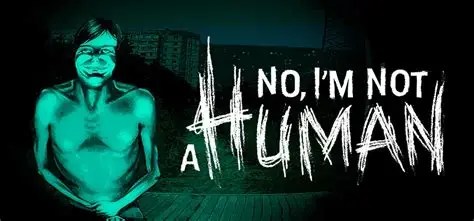
What’s your proximity to being the “Other?” Seeking to answer this question, the Russian-based independent game development studio Trioskaz released their hit horror game No, I’m not a Human. The game bears striking similarities to the indie game Mouthwashing, also published by the label CRITICAL REFLEX.
Well, first, what is the “Other?” There are plenty of literary definitions for it, but to stay brief, the Other is a minoritized or otherwise outcast character, shunned and ostracized for a particular set of attributes. For example, people who are physically disabled—a feature NINAH points out again and again.
NINAH is set in a post-apocalyptic world in which deadly solar flares have scorched the earth, making it far too hot to step outside during the day. Even looking outside could permanently blind you. Worse yet, strange beings known as Visitors are stalking outside homes, asking to be let in. If you’re alone, it’s over for you—this is how the game provides an incentive to let people in. Let no one in, and the Pale Visitor kills you. Let the wrong person in, and they kill you or another one of the strangers in your home.
Being the Other in this world is dangerous. Looking or acting different at all puts your life on the line, and in this game, everyone either looks or acts a little strange. Visitors are practically indistinguishable from humans, so the player remains hypervigilant and suspicious of everyone.
The game isn’t just a horror game; it’s a psychological horror game—one that asks you consistently to evaluate your morals. Once you let a stranger into your home, you can check them for signs of being a Visitor. The information about these potential indicators is broadcast on a news network, and the longer you play the game, the more arbitrary these signs get.
Dirt under the fingernails, redness of the eyes, fungus in your armpits. These signs seem normal for a body to have in a post-apocalyptic world. That’s why it’s so scary—how can you judge someone based on these very normal attributes? Throughout the game, you must morally evaluate yourself. Will you shoot the woman in your kitchen simply because her teeth are too white? Would you even let the “strange-looking” disabled woman into your home in the first place?
The game, though fiction, isn’t entirely fantasy. NINAH mirrors real-life events like the Holocaust and modern-day atrocities like the genocide of Palestinians and the oppressive force of ICE in the United States.
Through its horrifyingly compelling storyline, NINAH aims to put the player in the position of a civilian during a genocide. This idea is solidified when the player is checking people for signs and realizes they can check themselves, too. Many, many people abstain from checking themselves for signs but continue to pass judgment—an arbiter of death. Are you, too, the Other?
Through whom they decide to let in or deny entry, the player discovers their own prejudices towards those who are BIPOC, disabled, women, transgender, immigrants, and Jewish. This mechanic makes the ultimate message even stronger—alone, you are weak. Your damnation lies in your isolation. How will you justify who you turn away? Specific characters like the Vigilante remind you that you’re not safe from the same judgment you’ve passed on others.
NINAH is, appropriately, a multi-ending game. The choices you make shape not just your future, but the future of everyone else. Introspective and haunting, No, I’m not a Human is the perfect game for self-reflection in a devastating political climate.
 THE CAROLINIAN