
Ezra-Oscar Franchi, Arts & Entertainment Editor
There’s no better genre than horror. I mean it, and no, I’m certainly not overhyping it. Horror is a woefully misunderstood genre, especially among avid readers of other genres who recognize lowbrow authors like Stephen King and James Patterson as the alphas of the literary pack. I can’t tell you how many times I’ve argued with other horror enthusiasts over the poor quality of their works—I mean, these guys are the forefront of r/menwritingwomen. Seriously, I looked it up, and Stephen King was the very first author I saw.
All this to say, when a particularly well-read, Stephen-King-hating friend of mine suggested Tender is the Flesh to me, I watched a supportive, spoiler-free review of it on YouTube, and I was totally sold. I bought it for entirely too much at a second-hand store and pretty instantly regretted the purchase.
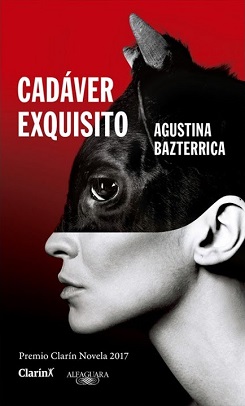
Tender is the Flesh by Argentine author Agustina Bazterrica is well known in the splatterpunk community right now. Splatterpunk is a genre that extensively depicts gore within the context of transgressive literature, focusing on characters who break free from social norms in unusual, often controversial ways.
The novel is set in a dystopian world in which a strange virus has made all animal meat unfit for consumption—in fact, animal meat is deadly, and humans (allegedly) have no choice but to turn to cannibalism for protein. The story follows Marcos, a “special meat” supplier, and centers on his relationship with a girl he’s tasked with raising as meat and then slaughtering.
And here’s the very first problem. In a world seemingly set up to challenge the reader’s perspective on veganism, the story chooses not to focus on the government—which, by the way, Marcos does cite as an issue many times—but on his sexual relationship with the human girl he’s keeping in a shed.
Herein lies the reason this book completely flopped for me: the extremely underdeveloped worldbuilding. You mean to tell me that in a world where all animal meat is inedible to humans, we couldn’t just rely on plants for protein? What about insects? Do fish count, too?
Within the first ten pages, Bazterrica unsuccessfully tries to explain away all the solutions to the problem she’s created. Researchers and doctors all claim that plant protein won’t save humanity. There’s no way around it. Meat is essential to human life.
The “most eminent zoologist” (whatever that means…is there an award for this or something? How deplorably undescriptive!) says the virus is a lie and is presumably murdered—or at least, that’s what Marcos believes, and this highly intriguing plot point is never truly revisited, outside of a cheap commentary scene later on. Likely, this throwaway point is meant to create distrust in the government. After all, the book is anti-factory farming (not pro-vegan, an important distinction to make).
I don’t disagree with the book’s basic premise. I mean, that’s why I was interested in reading it in the first place; it’s very fascinating to consider living in a world in which we have to resort to cannibalism, an action so horrifying, but in this same world, we never considered the equally horrific reality of factory farming.
However, when the main focus shifts away from the government, the critique begins to fail; or, rather, the critique fades away into the background. There’s so little to be said about the rest of the plot after “pure-bred” woman is introduced, and Marcos begins a strange relationship with her.
One of the most ridiculous parts of this novel is in the latter half, where several teenagers relentlessly abuse a puppy and shout expositional dialogue about “the government,” calling the virus a lie. That’s all there is to it—no deeper exploration of the ideas in sight.
I won’t comment on the writing style itself, since Bazterrica originally wrote the novel in Spanish in 2017 and Sarah Moses translated it into English three years later; however, as for the substance of the information Bazterrica writes, I’ll firmly argue it’s subpar.
Although Tender is the Flesh received the coveted Premio Clarín de Novela prize and a myriad of favorable reviews of the novel on YouTube, I couldn’t help but feel like people are just straight-up wrong about this book being really good. Let’s take a look at what other readers have to say.
While Goodreads isn’t representative of all readers, it can provide a glimpse into how much recognition practiced critics believe a book deserves. Tender is the Flesh received a somewhat lukewarm review, scoring 3.77 out of 5. Not so bad, but definitely not super great.
One of my favorite YouTuber book reviewers, frankie’s shelf, left a three-star review on the novel. He explained that while they were sorry to leave such a tepid rating, “the writing (or maybe the translation?) just wasn’t good enough to pull [the idea] off.” Frankie lamented that the novel was “woefully underwritten, starting as interesting social commentary but ending more like ‘[wouldn’t] this be crazy’ but without the worldbuilding chops to back it up.”
Overall, Tender is the Flesh plays with an interesting idea, but as author and reviewer Cindy Pham says, the novel reads “more like a parody instead of a thoughtful critique.” The genre, which allows viewers to reconsider their prior presumptions about the literary value of gore, isn’t used to any great effect. It’s just shock, and honestly, it’s just boring.
Headline image from Wikipedia.
 THE CAROLINIAN