
Caroline Turner, Opinions Editor
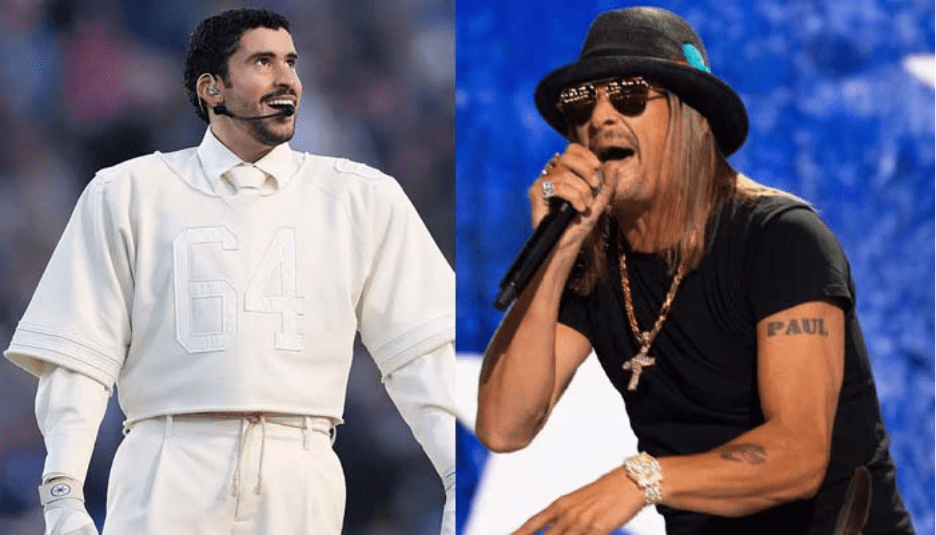
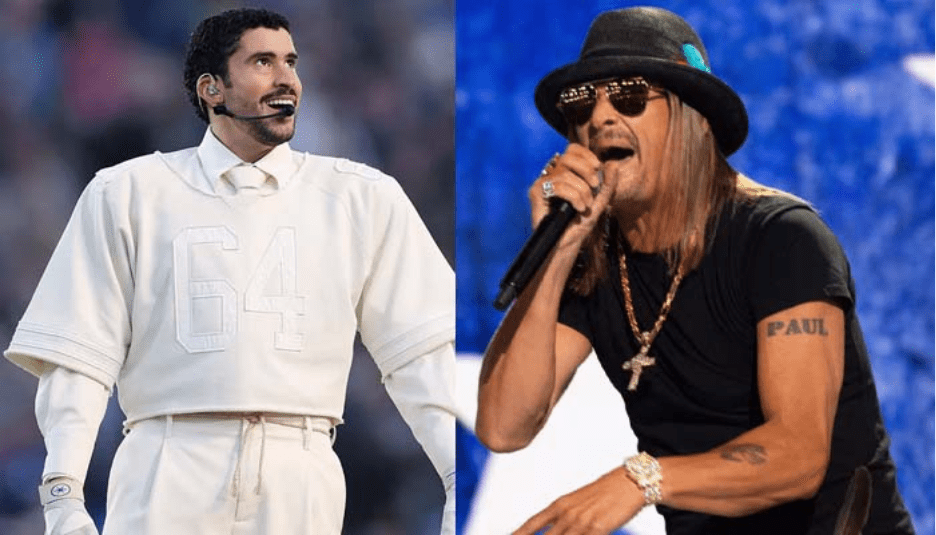
Unless you’ve been living under a rock for the last two weeks, you are well aware that Super Bowl LX has come and gone. And with the milestone of the 60th Super Bowl, there came a clear divide in United States families and Super Bowl parties across the nation. This isn’t the first time in Super Bowl history that there has been an alternative option to the NFL’s halftime show, but this is the first time that the alternative option came with clear political allegiances.
This alternative, of course, was the “All-American Halftime Show” hosted by Turning Point USA. Their halftime show positioned itself as the antidote to what the “mainstream, woke” halftime performance dared to be. Because when you think of America’s most unifying sporting event, what immediately comes to mind is: “You know what this needs? A parallel broadcast with a mission statement.”
The “All-American Halftime Show” wasn’t subtle about its purpose. Marketed as a corrective to the “woke” direction of mainstream entertainment, TPUSA’s show promised to restore something called “Real America” to the biggest entertainment stage of the year.
TPUSA’s version of the halftime show looked loud, aggressively patriotic, and deeply certain of itself. With guitars slung low, flags prominently displayed, and a tone that suggests the nation is simultaneously under siege and thriving. It looked less like a halftime show and more like a campaign rally that found smoke machines and pyrotechnics to liven things up.
The more interesting question, however, isn’t if the performance was entertaining. It’s in the irony of their idea of “real America.” To them, it is rural-coded, nostalgic, and it is loud about freedom while being selective about whose freedom is being defended. The TPUSA halftime show presents an America that markets itself as underrepresented while also dominating political headlines, fundraising cycles, and social media algorithms.
TPUSA’s halftime show featured Kid Rock, Brantley Gilbert, Lee Brice, and Gabby Barrett. This very narrow array of country music artists set out to represent all of America in this “All-American” show. Opening with an electric guitar rendition of “The Star-Spangled Banner,” the show started early with the imagery of bald eagles and the United States flag before moving into short sets for each of the artists.
Song choice was not accidental. Featuring Brantley Gilbert’s “Real American” and “Dirt Road Anthem,” Gabby Barrett’s “I Hope” and “The Good Ones,” Lee Brice’s “Drinking Class,” the unreleased “Country Nowadays,” and “Hard to Love,” and finally Kid Rock’s “Bawitdaba” and a cover of “Til You Can’t,” the playlist was less of a halftime set and more of a statement of what counts for “real America.”
The songs, taken together, reiterated a nostalgic yearning for a country where one can catch fish, drive trucks, drink beer—actual lyrics from Brice’s unreleased track. But the wish list didn’t stop there. It extended to cutting grass, feeding dogs, and wearing boots, as if the United States’ defining crisis is a shortage of lawn maintenance and pet appreciation.
The problem isn’t fishing. Or trucks. Or boots. The problem is the absurdity of presenting this narrative as “real America.” This narrow lifestyle of small-town, country aesthetics is TPUSA’s definitive portrait of the nation. With over 330 million people, thousands of cultures, and countless ways of living, TPUSA distilled “real America” into a carefully curated country radio loop akin to comedian Bo Burnham’s country music satire “Pandering.”
For TPUSA, the message was clear: authenticity sounds a certain way. Apparently, the American dream now comes with a lawn mower, a six-pack, and a strict genre requirement.
And then there’s the actual NFL halftime show—headlined by Bad Bunny. Bad Bunny’s performance felt like a cultural tapestry turned up to full volume.
Instead of focusing on a narrow, idealized vision of “America,” his show celebrated pluralism and unity. With most of the show performed in Spanish, it leaned into Latin rhythms, Caribbean imagery, and references to community life—from sugar cane fields to domino-playing abuelos to a wedding on the field—inviting viewers into a lived experience rather than a packaged ideal. The show closed with a message pinned to a football: “Together, we are America,” and a shout-out to countries across the Americas, not just the United States.
Bad Bunny’s set wasn’t about being loud or celebratory—it was about being inclusive. He used music and imagery to entertain and to share history and identity. His show was a love letter to Puerto Rico. The message “The only thing more powerful than hate is love” showed up throughout the production, framed not just as a slogan but as a truth woven into song and community.
Where the TPUSA setlist distilled a version of the United States into boots, trucks, and tailgates, Bad Bunny’s halftime show expanded the idea of who counts as an American—inviting everyone in, not just the people who fit a particular template. Bad Bunny’s halftime show was built on connection.
In the end, neither halftime show was just about the music. They were about ownership. And who gets to define the United States, not in a policy paper or a voting booth, but in a musical interlude broadcast to millions.
One performance imagined the U.S. as something to reclaim. The other imagined it as something still unfolding. One narrowed. The other widened.
And maybe that’s the most telling part. We no longer only argue about politics. We argue about playlists. About stages. About who gets the microphone.
Apparently, even halftime now requires choosing a side.
 THE CAROLINIAN