
Caroline Turner, Opinions Editor
We’ve all been told that social experiences are an essential part of college life. Orientation leaders say it, campus brochures promise it, and professors will remind us that learning doesn’t only happen in the classroom. This is true, but it’s something that continues long after college. Once the tassels of our graduation caps turn, work and life continue their ongoing tug-of-war.
The problem for many college students is that those two spheres—work and life—are already deeply intertwined. Classes blend into homework, homework blends into jobs or internships, and the places we live often become the places where we work. Dorm room, apartments, and houses, double as study spaces, offices, and classrooms. When everything happens in the same space, it becomes difficult to separate the roles we occupy.
This is where the idea of the “third place” or “third space” becomes useful.
Sociologist Ray Oldenburg introduces the concept in his book The Great Good Place. Oldenburg describes home as the first place and work as the second place, but he argues that healthy communities rely on a third category of spaces: informal environments where people gather, socialize, and build connections outside of their responsibilities.
Traditionally, third places include locations like libraries, parks, cafés, bars, bookstores, theaters, and community centers. They are spaces where people can linger without pressure, where conversations happen naturally, and where relationships form organically. Third places are meant to foster community, connection, and belonging.
My issue with third spaces? Most of them aren’t free.
For college students especially, that matters. The modern college experience already blurs the line between work and life, and third spaces help restore some balance. There is only so much work a person can do inside their home before the walls start to feel like they’re closing in. I’ll bet many of you know the feeling: staring at the same desk, in the same room, with the same stack of assignments until even the act of studying begins to feel suffocating.
For years, the university library filled that role for me. I’ve spent more time in libraries than I care to admit, and it’s one of the few places on campus where work and community coexist. Students studied together, ran into friends, or simply shared the quiet presence of others working nearby. It wasn’t just a place to complete assignments; it was a place to exist among other people.
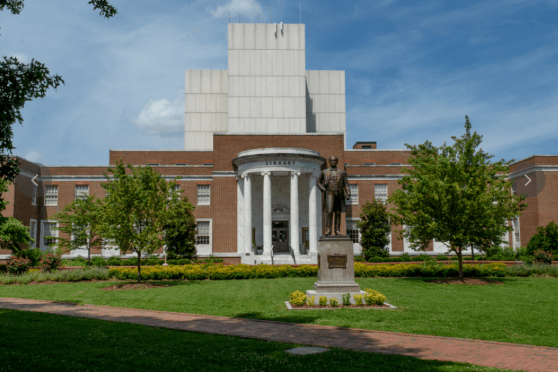
Since construction began on our library, it’s been harder to access. Study spaces are more limited, and while they exist, reserving rooms for a study group (body doubling is a necessity) has become even more difficult. With the current library renovation, many of us have turned to other so-called third places.
Cafés are an obvious alternative. I would gladly work from a coffee shop for hours. The atmosphere is perfect: background noise, movement, and the comforting hum of conversation. The problem is that these spaces come with a price of admission. If you sit in a café long enough, it’s expected that you buy something. And if you’re like me, you’re there long enough that it’s expected you buy several things. Coffee, lattes, snacks, and pastries. What starts as a study session quickly becomes an expensive habit.
Bars present a similar issue. They can be social spaces, but that also requires spending money and are rarely designed for productivity. Parks are another possibility, but let’s be honest: weather, pollen, and unpredictable internet access can make that option less appealing. As someone who is aggressively allergic to the outdoors, I can confirm that nature is not always the answer.
Which brings me to my original point: we need more third spaces.
Not just in the world, but on our campuses as well.
Imagine spaces designed specifically for gathering without financial obligation. Places where we can sit, talk, work, or exist without the expectation to buy a drink. Spaces where conversation is plentiful and laughter is frequent. Spaces where people feel welcome whether they stay for ten minutes or three hours.
These environments do more than provide a change of scenery. They build a community. They create opportunities for spontaneous interaction.
I’m not claiming this as revolutionary. Third place theory has existed since 1989, and the principles that Oldenburg describes remain largely the same. If anything, the concept feels even more relevant today. Modern life pushes us toward productivity at every moment, and our social lives increasingly migrate online. A true third place today probably needs something Oldenburg never had to think about: reliable Wi-Fi.
The core idea remains the same. Communities thrive when people have places to gather without pressure or obligation.
Maybe the solution isn’t complicated at all. Maybe the answer is simply more spaces for students to sit down, open their laptops—or close them—and just be around one another.
The world, and our campus, would be better for it.
 THE CAROLINIAN