
By Cassandra Hardman, Staff Writer
Published in print Mar. 4, 2015
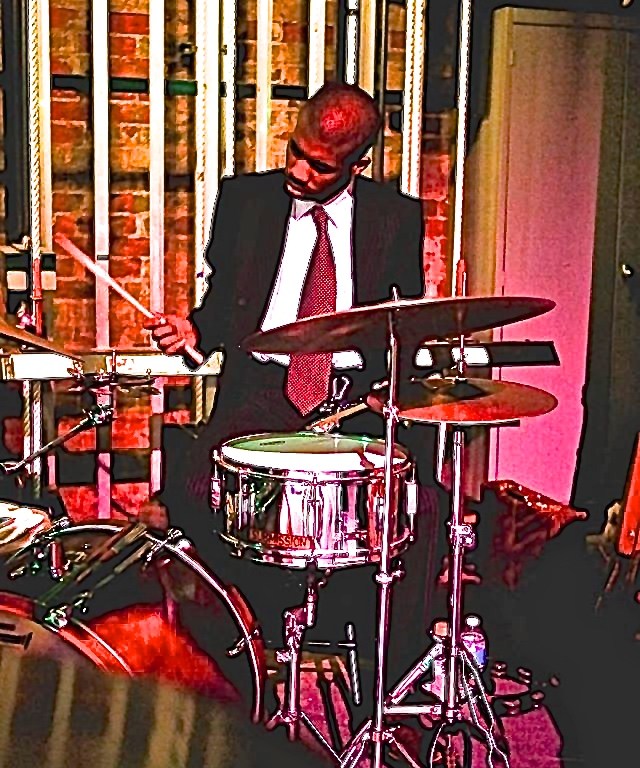
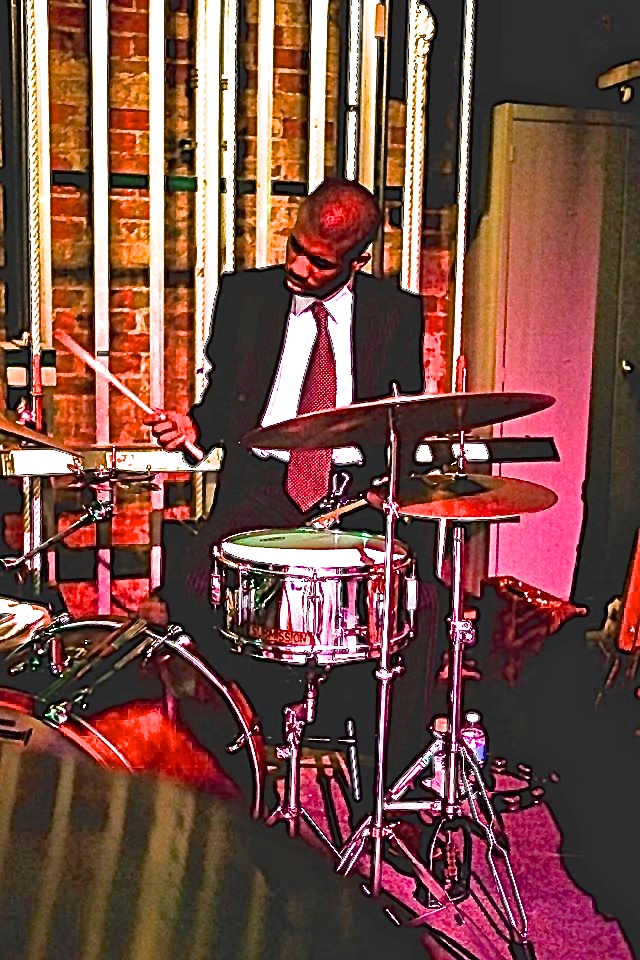
As the sound check ended, Larry Draugh Jr. approached the microphone at the International Civil Rights Center & Museum, jumping right into the show. It was exactly 5:00 as Draugh introduced “Black Rhythm and Blue Harmony: the Sound of a Movement” and his band members for the night. Draugh himself would be on the drums; on the guitar was his best friend, William Darity, and on the violin, Kenny Phelps-McKeown.
“We want to bring honor and acknowledgement to those who are from here, those we don’t usually talk about,” Draugh said. A program was not given out at the beginning of the evening and Draugh said he liked it better that way. He told the audience his goal was to not only entertain but to have dialogue with them and be able converse about the history. “This is not our [African American] history, but our history as Americans.”
The band started with a jazz piece that Draugh composed himself titled “Convergence”. The way guitar and drums played against together seemed to illustrate how blacks and whites can agree that in the past decade there has been a convergence of values. It was a “beautiful mess” in a sense. A big sound came from all three instruments, each playing at the same time, picking up speed and volume. It went from a battle to a chaotic mess, ending with a drum solo and another few seconds of each instrument playing peacefully together.
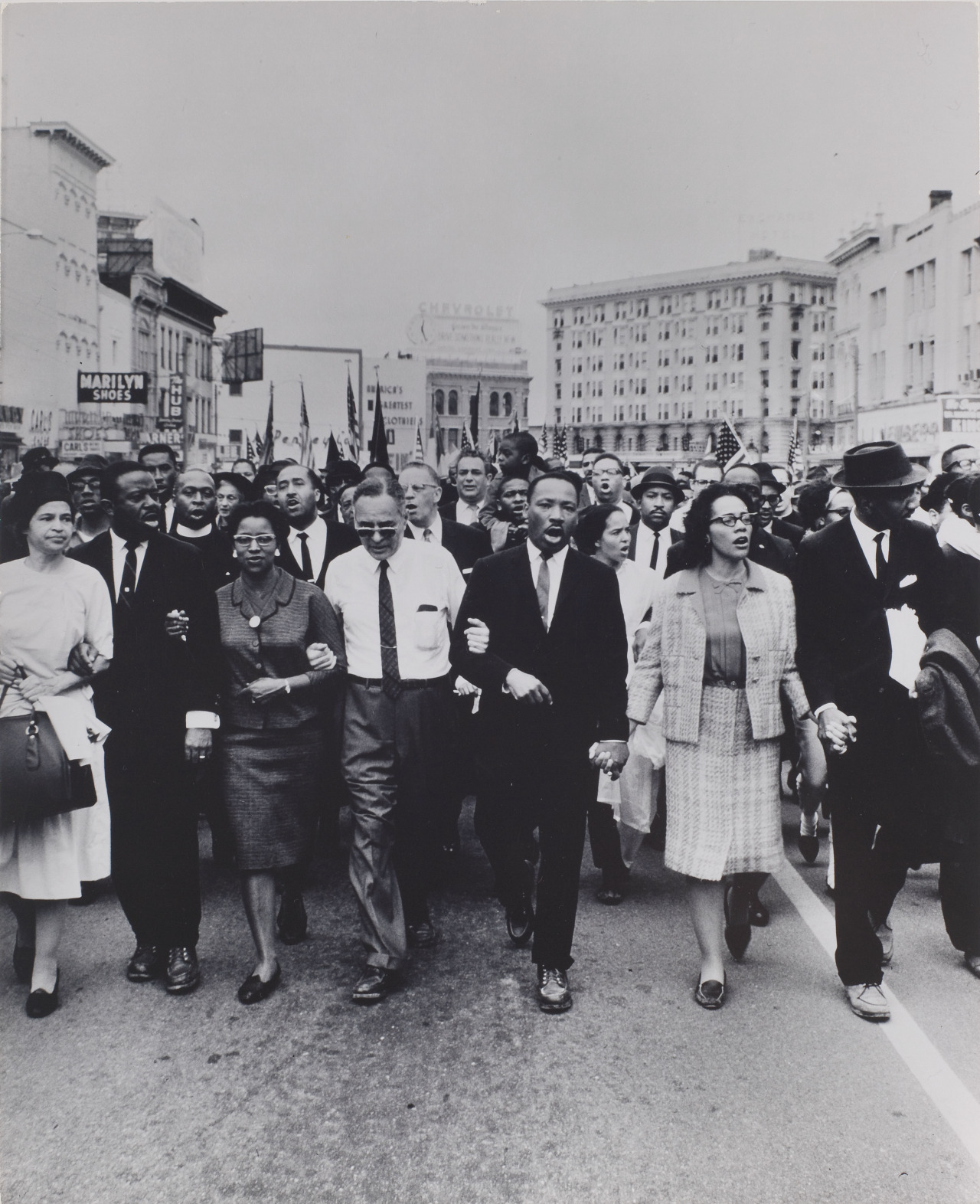
Vanessa Furgeson was introduced to the stage next. Draugh played a sound bite of Dr. Martin Luther King’s March on Washington speech: “The revolution is at hand, and we must free ourselves of the chains of political and economic slavery.” As the band played, Furgeson started to sing. Her voice was amazing; as she jumped into character it took over the audience.
Her first song, “Stand By Me”, was an original slave hymn of Charles Tindley, the “Father of Gospel Music”. A son of slaves, Tindley worked as a janitor during the day to afford night classes. He began preaching at a church in Philadelphia and before his death in 1933 his church had over 12,000 members.
Next Furgeson and the band played Max Roach’s “Freedom Day”. The song referenced emancipation law that had finally been passed in 1865 after the end of the Civil War. Furgeson’s voice paired with the song’s lyrics were chilling, giving you goose-bumps as you listened and were reminded of the times when African Americans had reached a milestone.
“Can’t conceive it, don’t believe it/ But that’s what they say/ Slave no longer, slave no longer/ This is Freedom Day.” After all the years of being separated from their families, being beaten, chained and shackled, or not having equal rights that Caucasians did, blacks were finally able to do all those things. Having actual freedom was hard to grasp for African-Americans and that feeling was evident in Furgeson’s voice.
Draugh introduced the show’s final section with a projected video, saying, “I’m just going to let the clip and Tupac speak for himself, because he can say it better than I can.” The clip was from 1992, when Tupac Shakur spoke at the second annual banquet of the Malcolm X Grassroots Movement. His speech addressed what was going on in the world at the time. At 20 years old, Tupac was seeing some social changes; however, he was part of a generation that didn’t know slavery firsthand but was experiencing other obstacles such street wars, drugs, pimps, young pregnancies and gang problems. He discussed how blacks need to stop hurting and competing with each other, and to stop blaming whites for things while their people continue to hurt their own communities.
When the clip ended, Phelps-McKeown played a solo on the violin; afterwards, Furgeson backed a spoken word piece of hers.
“He cries to the heavens above, and there is a storm in my heart,” she said. “She lives a life she didn’t choose, and it hurts like brand new shoes.” The piece went on and Furgeson referenced the Mike Brown shooting: “Heroin, crack, black on black crime, get shot six times by those who’re supposed to protect us.” As the spoken word piece continued she referenced the Eric Garner case, saying, “They do what they do – they ain’t got to be right.”
 THE CAROLINIAN