
Spencer Schneier
News Editor
The open web, the home of funny cat GIFs, nearly universal accessibility and low cost to users, is facing a massive threat to its existence: adblocking.
Since its inception, the Internet has been a place where people from all over the world could share their thoughts and ideas, and they are able to do so without many barriers to entry.
This has led to the rise of social media platforms, increased entrepreneurship and even new sources of media like BuzzFeed for news and Bleacher Report for sports. Due to a plethora of factors, the Internet as it exists today is under threat and is in danger of becoming a fragmented, set of “walled gardens.”
The walled garden concept describes the implications of the continued fragmentation of the web. One example of a walled garden is Facebook’s new Instant Articles, which provide exclusive content that can only be consumed from inside the Facebook app on a smartphone. Because this content forces the user to stay within Facebook’s ecosystem, it creates a “walled garden” of sorts because users cannot leave Facebook very easily from within its content. Major publishers headlined by the New York Times partnered with Facebook on the initiative.
Tech giants such as Google, Apple, Facebook and Twitter are all in competition for exclusive content, with the implications of this being the increasing fragmentation of the web. The economic benefits of doing this are clear, but the long term damage it might do to the web could be irreversible.
Now, what exactly does adblocking have to do with everything I just shared?
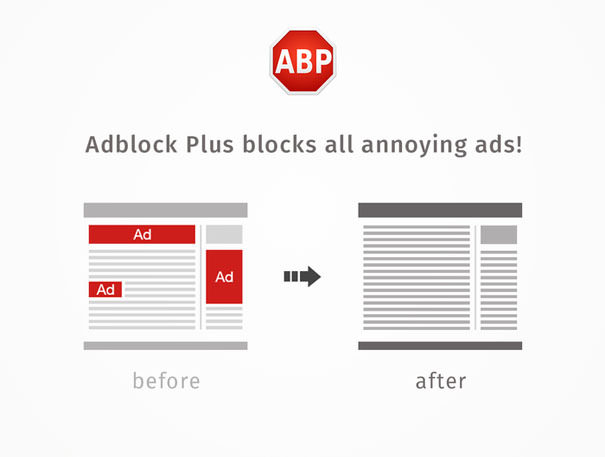
With the release of iOS 9, Apple’s new mobile operating system, the company allowed for the downloading of adblockers for the first time on their mobile platform. These adblockers are apps that run on top of web browsers (such as Google Chrome or Safari), and they block advertisers from displaying their content on web pages. Ad-blockers have been popular on desktop and laptop computers for a long time, and a report from 2014 by advertising analytics company PageFair notes that 41% of users aged 18-29 were using an adblocker while they surfed the web.
PageFair estimates the number of users utilizing an adblocker at 198 million people as of 2015, which is not a massive number relative to the total number of internet users, but is still a large number when factoring in advertising costs. That same report from PageFair states that the total cost to publishers in 2015 of adblocking is $22 billion.
For the publishing industry, which is suffering from a drop in print subscriptions, this loss of revenue is absolutely devastating, and it is leaving them with no choice other than to flee to other sources of revenue. As previously mentioned, Apple allowed the use of adblocking in its updated mobile operating system, which also happened to coincide with its launching of its Apple News app: its own walled garden for publishers.
Apple of course is making sure that publishers can receive revenue through their platform, which includes ads. However, in forcing users to switch to its application ecosystem, it is attempting to get its share of the market before its competitors do.
While there is nothing immoral with Apple responding to a shifting market, that does not mean that the situation merits a simple shrug and an “oh well.” The solution to this problem is simple: users must stop stealing content.
When a user downloads an adblocker, they are insinuating that they deserve to benefit from the work of others’ without compensating them at a fair rate. Most people wouldn’t have a landscaper come to their home and do work for an afternoon, only to say that they don’t feel like paying them at the end of their hard day of work because it is “inconvenient.” Having to fairly compensate people is so darned inconvenient!
Not to mention, this isn’t some kind of massive payment. No one is even asking for money! They simply want users’ computers to load an advertisement. A common response to this point goes as follows: “But sometimes I have to wait five seconds! Some are so bad I have to click an “x” button!” Ignoring the absurdity of the fact that this is all you have to do to pay for some of the highest quality content on the web, the cost of this is so fractional that it seems there is no value in analyzing it.
That being said, because we’ve decided that a five second ad is so inconvenient that we are important enough to block it, let’s calculate what the cost of that ad is to those users who must suffer this horrible indignity.
The minimum wage in North Carolina is $7.25 an hour, so we will use this figure as our opportunity cost of time (it could of course be higher, but most college students don’t work for much more than minimum wage). 7.25 divided by 60 (60 minutes in an hour) equals roughly 0.12. 0.12, divided by 60 again (60 seconds in one minute) equals roughly 0.00201.
0.00201 multiplied by five (five seconds of advertisement) is equal to roughly 0.01. When you choose to adblock a five second ad, you are telling that writer, that publisher, that person who spent hours of their life compiling the content you are consuming, that their work is worth less than a penny! The fact that you are choosing to consume this content and spend more than five seconds on it, means that to you the article is worth several magnitudes what you had to pay for it, yet you chose not to pay for it!
This theft equates roughly to shoplifting, or pirating music on Limewire, except the victims of this crime are much more vulnerable than a large retailer or the thriving music industry.
By blocking ads, users are stealing advertising revenues from publishers of all sizes, but for small publishers advertising is their livelihood. Many independent and small publications have to scratch and claw for every penny, and they simply cannot survive a climate where they have to either provide free content, or have to bring on staff to tailor their content for the various walled gardens of the rapidly closing web.
So I say to anyone who is thinking about installing an adblocker in the future: Are you looking forward to a time when the web will be as fragmented and convoluted as your cable bill?
Because every time someone installs an adblocker on their browser, that is another blow to the open web, and another step towards a future where content will be fragmented across a variety of walled gardens. A future where only major media outlets are able to survive, and small and independent publishers are unable to compete. Preventing that future is worth more than a few pennies to me.
 THE CAROLINIAN