
Aidan Van Nynatten
News Writer
Photo credit: Jules Belfi
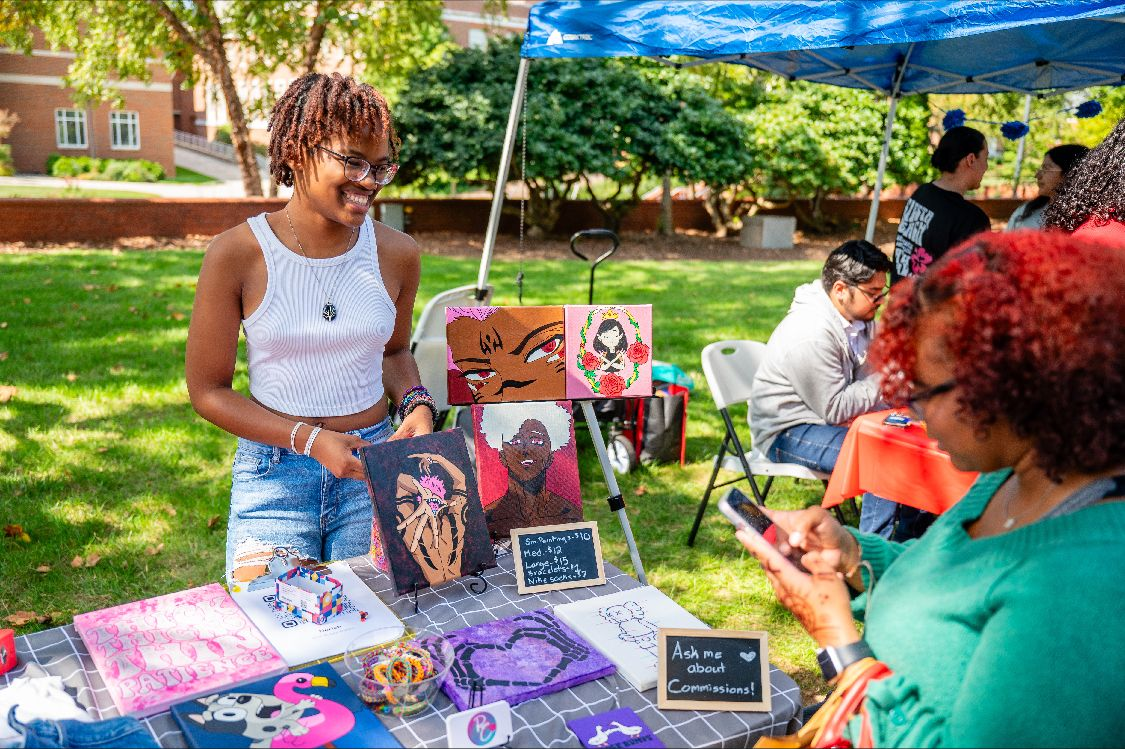
Regular readers of The Carolinian will remember last semester’s coverage of the new Student Marketplace on campus, spearheaded by Jules Belfi as a venture of the Collegiate Entrepreneurs’ Organization (CEO Club). The marketplace is returning to College Avenue this semester on March 19, from 10 a.m. to 4 p.m.
The bulk of the products students will sell are similar to those from October. Vendors will sell clothing, jewelry, paintings and art prints, keychains, flowers and bouquets, candles, plushies, body care and nail painting items, and, in a particularly novel addition, haircuts.
Belfi primarily handled and organized last year’s marketplace herself, but this semester the leadership has expanded. CEO Club Director of Outreach and Vice President-elect Meaghan Dohnert is lending a fresh perspective to the project. Having contributed to the volunteer work on the day of the event in the fall, Dohnert decided to help Belfi in the administration of the marketplace in the spring.
Dohnert has taken a personal interest in streamlining several aspects of the marketplace, including smoothing out the volunteer process. Volunteers will have a higher level of commitment, and it will be easier for volunteers to accept and delegate specific tasks. Both Dohnert and Belfi expressed the importance of having a reliable base of volunteers for a venture of this size, acknowledging the struggle of finding people who can commit their free time and coordinating schedules. Dohnert has created an improved system to address these concerns, allowing them to split up roles and assign task forces for setup, breakdown, general management (surveying vendors, keeping track of income, etc.), and day-of promotion.
There have also been new challenges due to the growth of the project, as Belfi and Dohnert informed me. For instance, the event has been subject to an increase of fees and regulations levied by Campus Enterprises, the primary organ responsible for overseeing student activities, and Campus Activities and Programs, a branch of the former. One of the most troubling regulations is a recurrence of an old struggle for the student marketplace: food vendors. Even though food vending ultimately happened in October, there will be no presence for them this time. According to Belfi and Dohnert, because of communication delays with administration, the vendors were not able to meet licensing requirements for commercial food production in time.
On top of that, volunteer work has been a continued obstacle. Despite Dohnert updating the method of coordinating volunteers and growth in the number of participating vendors, there has been little growth in volunteer numbers.
These challenges have been crucial learning experiences for all those who put on the Student Marketplace, and they have also informed another key contribution of Dohnert’s to the enterprise. She created a marketplace report, which is a set of guidelines for future CEO Club members looking to replicate the marketplace for future students. She identified that, while Belfi’s efforts in creating the event in the first place were remarkable, it would be necessary to standardize the process for future club members to avoid having to start from square one. Both Belfi and Dohnert will graduate within the next year, and the CEO Club faculty advisor, Dianne Welsh, who oversaw the inception of the marketplace, is set to retire soon. For these reasons, recruiting passionate members who have the will to keep this event alive has become a primary goal of all involved.
Keeping the administration of the Student Marketplace as much within the purview of the CEO Club as possible is one of the CEO Club’s primary goals now. Although there are other student clubs on campus that are business- and finance-oriented, the CEO Club is uniquely qualified to assist with entrepreneurship, and they look outside the Business College to do so. Belfi and Dohnert remarked that, while there are business majors who vend for the event and their educational background proves useful, non-majors in business have demonstrated a much keener willingness to take risks that business students often don’t even consider. This feeds into the core mission statement of the Student Marketplace, which is to instill in everybody, regardless of major, the confidence and know-how to be able to monetize their skills and to provide a supportive and cooperative community in which these skills can flourish.
 THE CAROLINIAN