

Bronwen K. Bradshaw
Features Writer
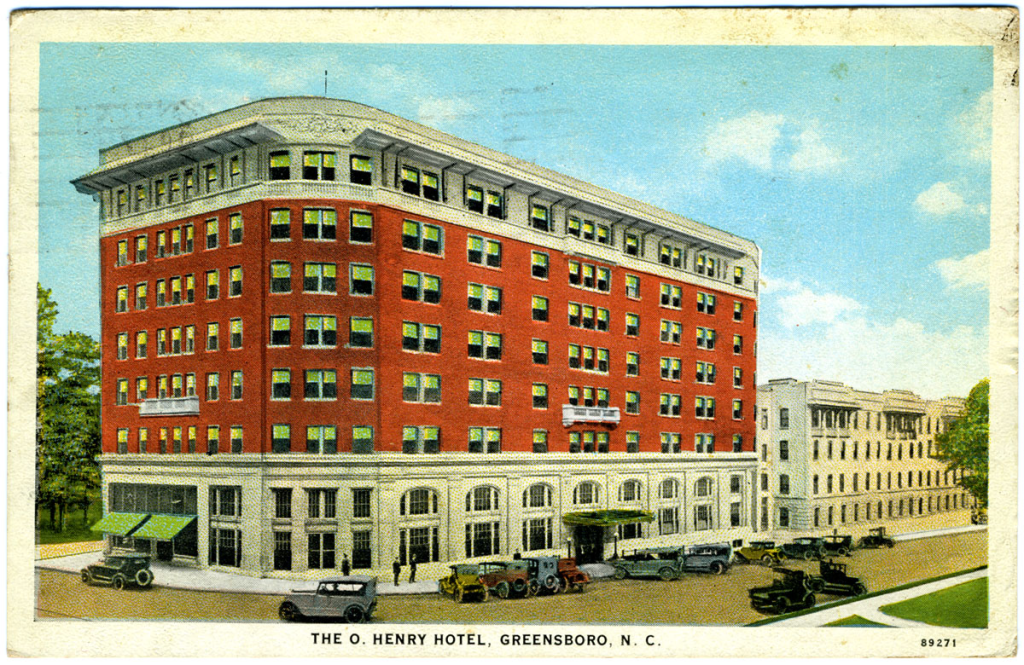
Photo credit: Wikipedia.org
O. Henry was a prolific writer known for his short stories such as “The Gift of Magi” and “The Duplicity of Hargraves.” O. Henry was born William Sidney Porter in Greensboro on September 11, 1862. After his mother died when he was three, Porter, with his father and brother, moved into his father’s family home, where his Aunt Lina also lived.
Porter attended his aunt’s school, which helped support his love of books and literature. He moved on to high school, although his aunt continued to tutor him, and he started working at his uncle’s drugstore. Porter drew Greensboro citizens he observed while working at the store. Porter moved to Texas in 1882, where he was later arrested for embezzling funds while working at First National Bank of Austin. He fled and initially avoided jail but eventually surrendered, being sentenced to five years in prison. Porter was released for good behavior after three years and started going by O. Henry to hide his identity. By 1902 he had moved to New York City and began publishing his work, producing over 350 short stories. Porter died at age 45 but was forever immortalized through his works and Greensboro’s own O. Henry Hotel.
The downtown Greensboro hotel opened its doors in 1919 as one of the finest in the city at the time. It was designed by William Lee Stoddart, responsible for many other urban hotels in the South. One of the reasons for the O. Henry’s success was the growing population in Greensboro, which also brought a rise in travelers, so the city called for a new hotel for guests who were visiting the town. It was the first modern hotel in Greensboro.
The hotel dedicated a second-floor room to O. Henry and his accomplishments, featuring photographs and paintings of notable scenes from his most prized works. All O. Henry’s books, short stories, and publications were on display for guests to browse and read while staying at the hotel. Due to its popularity within the first two months of opening, the O. Henry Hotel devised a plan to create an annex in an old cotton warehouse to accommodate the influx of room requests. The annex, called the King Cotton, opened in 1927.
The O. Henry flourished from its opening into the late 1960s. However, in the 1970s, the original hotel began to wear down and was eventually closed and demolished to create an office building in its place. According to the Greensboro News & Record, “The King Cotton and the O. Henry were torn down in the 1970s, unable to compete against new interstate hotels and motels.”
In 1998, Dennis Quaintance, CEO of the present-day O. Henry hotel, reopened its doors for the first time in decades. Quaintance, in his commitment to preserving O. Henry’s legacy, kept the hotel centrally located in the city and maintained it as a memorial to the writer. In the reconstruction process, Quaintance’s goal was to replicate the original to the best of his abilities, even keeping a brick from the old hotel in his office to make sure the new construction materials were identical to the original.
Now, 26 years later, the O. Henry is still one of the finest hotels in Greensboro. The hotel also provides unique features such as afternoon tea, a delightful experience where guests and non-guests alike can relax in the social lobby while drinking tea and enjoying an assortment of sweets and foods. The O. Henry Hotel also hosts jazz nights every Thursday from 6 to 9 p.m., a perfect opportunity for jazz lovers to enjoy live performances from local musicians and guest vocalists.
The O. Henry Hotel is not just a magnificent hotel but a living testament to the culture and history of Greensboro. It stands as a proud symbol of the city’s heritage, offering a place for travelers and those wishing to stay in a historical hotel of their hometown.
 THE CAROLINIAN