
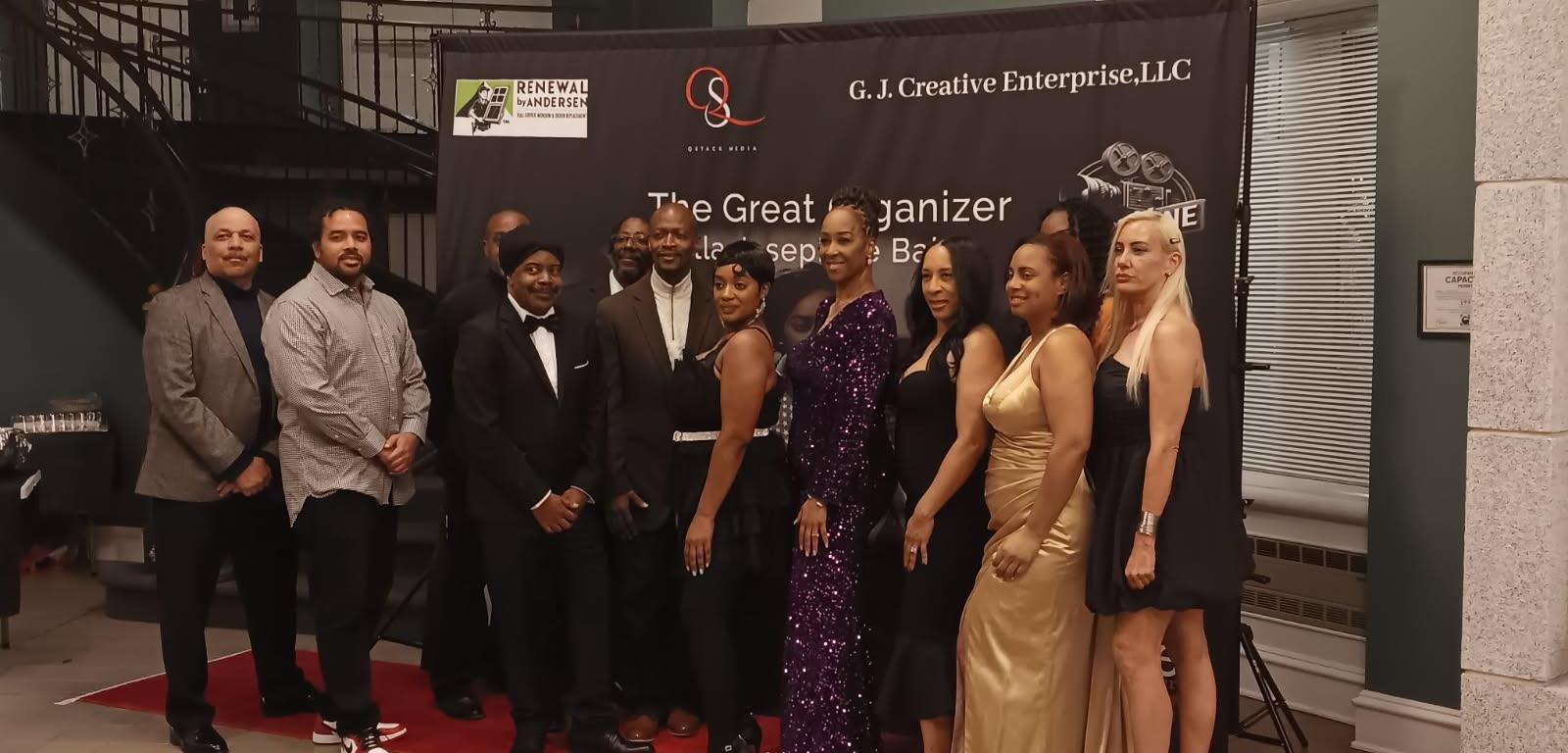
Crystal Thompson, Features Editor
(Image courtesy of Jackie Sanders)
To say that the Black History celebratory events of this past Saturday and Sunday were nothing short of amazing would do a disservice to the writers, actors, producers, crew, and others responsible for organizing one of the most educational film premieres. As mentioned in last week’s feature, Wright’s goal was to tell the story of Ella Baker in the truest, most honest way possible to genuinely detail her work as a Civil Rights organizer.
It did not disappoint. The need for Baker’s legacy to be honored was demonstrated at a nearly sold-out gala on Saturday. Upon entering the Greensboro History Museum, the energy was robust, welcoming. Some of it was excitement to be part of a community of support for those involved in the production of the film. But much of it came from being a part of an exclusive moment of learning.
Many viewers shared the sentiment of not knowing Baker’s complete story prior to the premiere, and that was echoed on Sunday. The film left people moved to do more research on Baker and other Black women who aren’t typically mentioned alongside the Black men who receive majority of the credit for spearheading the Civil Rights Movement. To understand the full scope and impact this viewing had, it’s important to note that several attendees mentioned they wouldn’t have known about Baker had it not been for the screening of Wright’s film. One viewer said, “This was very interesting and eye opening. I’m going to have to go home and look up more about her now.” Another said, “This should be taught in every history course, this very film.”
What made understanding Baker’s story so interesting was the fact that it was written, produced, directed, and acted in a way that made the audience feel as if they were eavesdropping on the interactions Baker had with many other activists during that era. It doesn’t require advanced knowledge of film to credit the “liveliness” of the movie to the stellar acting. Camillia Carter played Baker, and it was difficult to remember that we were watching Carter portray Baker instead of actual footage of the activist herself. That is how deeply she stepped into the role, bringing Baker back to life. Likewise, while watching, it is easy to think that Sandra Simpson-Leary has a direct connection, lineage even, to Corretta Scott King given how seamlessly she adopted the mannerisms and nature of King.
This type of acting was par for the course throughout the film. Clearly, creators Larry ‘Syid’ Wright and Glenn Jones intended for the acting to match the purpose of telling Baker’s story; to impact and move the audience. That mission was accomplished, but it went even further. The cast and crew were equally inspired. Carter said, “I will forever be changed. Her words are ingrained into my mind, decisions, and heart.” Other cast and crew members shared that they were moved by the passion the team had for this film. And, although this might seem like a review of the film, it’s more a testament to that passion each of them congratulated one another for. It’s what the audience saw and what made the film superb. Being educated about one of the most influential figures of the Civil Rights Movement was the cherry on top.
Ella Baker: The Great Organizer is not available on any platform yet. It will be available for a small fee in the future. Meanwhile, for more details about the film, cast, and crew and how to become a sponsor for more showings, visit the website.
 THE CAROLINIAN