

Crystal Thompson, Features Editor
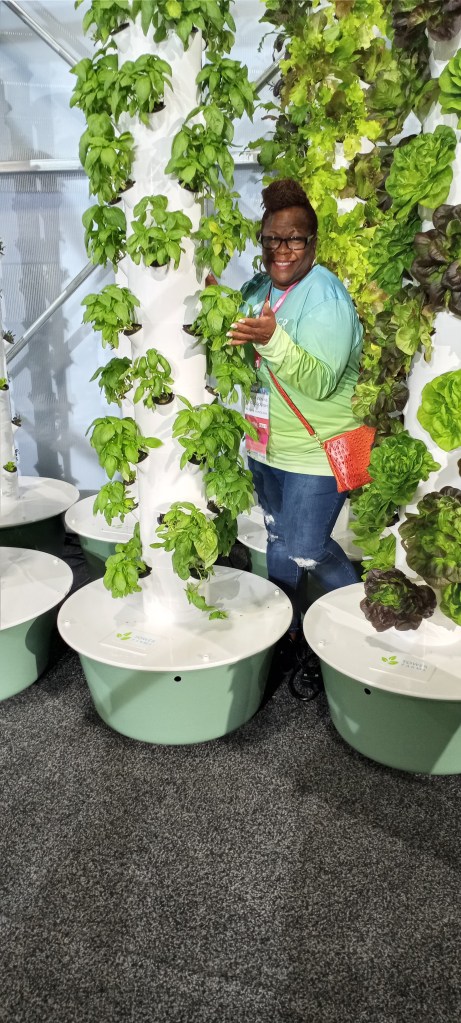
There’s a harsh reality we must face: many people across the nation are experiencing food insecurities, whether it’s a lack of healthy food, limited access, increased prices, or shortage. Presently, a dozen eggs costs anywhere from $4 from a farm to $10 in conventional grocery stores. This crisis doesn’t seem to be getting any better or going away anytime soon and is actually getting worse. Experts point to inflation, avian diseases, high demand, and a change in administration as reasons why consumers are witnessing higher food prices. However, this isn’t a new issue, and solutions tried in the past have largely failed to address other contributing problems. One solution is to garden, but that isn’t always feasible.
An agrarian lifestyle is not easy. It requires long days of hard work, patience, and quick learning. It can be a game of trial and error or a journey of success and abundance. The general thinking is that it also requires large swaths of land, special tools, and more time than most have. For a traditional garden, this might be an amateur’s experience, but for some of us, this has been a natural part of our lives. As Denise McCollough of Tower Gardens reminds us, “Once you become an avid gardener, not gardening isn’t an option.” There are various circumstances that prevent people from maintaining a garden: strict rental policies, no yard, dorm and apartment living, HOA restrictions, to name a few. This reality can prevent sustainable living and decrease access to healthy food options, which can be devastating for those experiencing food insecurity.
“Hunger has no zip code,” McCollough says. “With global warming being real, with climate change being real, it makes sense to grow our fruits and vegetables” and she and her team have found a way to make gardening more accessible with the Tower Garden. They have developed and implemented a curriculum for schools in Greensboro that includes the Tower Garden as an educational tool. “It’s a full K-12 curriculum and we’ve adapted it to teach anyone.” This program is changing the way children learn, eat, and perceive food. “We know for a fact that if they grow it, they’re more likely to eat it,” says McCollough. When the Tower Garden team is scheduled to visit classes, students are less likely to be absent. This means those students receive more education.
The tower garden curriculum is oriented towards STEAM. Students can decorate the towers in their classrooms, it teaches science, technology, engineering, and math. But it’s not just for children and the pathway to multiple ways of learning the towers provide is numerous. “It opened the door for us to have so many other conversations including financial literacy, respect, empathy and sympathy,” says McCollough. Vincent Webb, Jr. from the Guilford County Center of the NC Extension partnered with the Tower Garden team to teach kids about canning so they could learn how to preserve and store the food they grew. The team uses terms like “germinate” to help teach students not just gardening terminology but how to spell.
“I’d like to see the towers here in Greensboro in all of the schools,” says McCollough. They are at A&T, the Charlotte Hawkins Brown Museum, and eight different recreation centers here in Greensboro, and in twenty different countries around the world. UNCG’s AADS has two tower gardens now and Dr. Deborah Barnes has donated a third. “We really want to keep the AADS department alive. And we want them to get recognition for addressing hunger.” As McCollough and her team of Tower Garden champions continue fighting food insecurities, McCollough inspires others to be more proactive in preparing for the future of food. “I would just like to encourage growing your own food because that’s a flex. When you can grow your own food from seed, that’s a flex. Food is another form of currency.”
If you’d like to become a Tower Garden ambassador, contact Denise McCollough at towergardenglobal@gmail.com.
 THE CAROLINIAN