

Virginia Weaver, Senior Staff Writer

Microwaved Beef is a column by Virginia Weaver that reflects on flashpoints from the last few years in the culture wars. The rapid pace of contemporary discourse makes it easy to forget critical moments that have defined our social and academic lives for the last few years. Microwaved Beef brings those moments back into the spotlight.
It’s easy to forget how omnipresent awareness ribbons were just a decade or so ago, on car bumpers and water bottles and t-shirts. In the mid-2010s, there were so many awareness ribbons of dizzying variety and often obscure meaning that a vicious parody could insert itself into the visual lexicon unnoticed.
One awareness ribbon has withstood the test of time like no other: the pink ribbon, which is still used to promote breast cancer awareness.
But the ribbons could become far more specific than the most famous pink ribbon. According to the National Breast Cancer Foundation’s web page entitled “The Color and Meaning of Cancer Ribbons,” the ribbon for metastatic breast cancer is pink, teal, and green.
Gastric cancer is periwinkle, and uterine cancer is peach. Head and neck cancers are burgundy and white, respectively.
Many viewers would recognize that a pink ribbon stands for breast cancer awareness in toto. Few would recognize any of the increasingly obscure ribbon colors—both because they’re obscure and because they could mean many things at once.
How awareness ribbons malfunctioned
Despite the confusing number of ribbons, it seems possible that a viewer could decipher an unfamiliar color scheme via Google. However, even searching for a ribbon by color is often fruitless.
The first result for the author’s Google search of “what does a purple ribbon mean” is the following passage that Google pulls from the article “Awareness Ribbon Guide Colors and Meanings”:
Purple typically represents pancreatic cancer and epilepsy. It is also a symbol for Alzheimer’s disease, lupus, animal abuse, Crohn’s disease, cystic fibrosis, fibromyalgia, sarcoidosis awareness, thyroid cancer, ADD (Attention Deficit Disorder), and religious tolerance.
The site then has a longer section listing many meanings of purple ribbons:
ADHD, Animal Abuse, Crohn’s Disease, ADD, Arnold Chiari Malformation, Alzheimer’s, Anti-Violence, Fibromyalgia in Men, GI Cancer (Intestinal), Chronic Pain, Colitis, Cystic Fibrosis, Epilepsy, Fibromyalgia, Harmony, Homelessness, Leiomyosarcoma, Lupus, Mucolipidosis, Neuropathy Awareness, Macular Degeneration, Migraines (1st choice: alternate burgundy), Domestic Violence, No Unattended Kids in Cars, Pancreatic Cancer, Pancreatitis (Chronic), Thyroid Cancer, Religious Tolerance, Mesh Survivor, Sarcoidosis, Sjogren’s Syndrome, Thymoma Cancer, Rett Syndrome, Victims of 9/11
A purple ribbon could be promoting awareness of Rett Syndrome, but could also be promoting religious tolerance. The ribbon can mean anything from remembering 9/11 to promoting awareness of ADHD. And fibromyalgia is also represented by a cranberry ribbon, per the same site.
8chan and the Ebola-chan cult
In 2014, an Ebola epidemic was tearing through communities in Western Africa, and the disaster was widely reported on in mainstream media.
Only a few months earlier, in October 2013, the imageboard 8chan (now known as 8kun) had joined the right-wing social media landscape. Viewing 4chan’s restriction of conversation around the ongoing Gamergate controversy as overly repressive, Fredrick Brennan founded 8chan to promote freer discourse.
8chan would go on to become notorious for its alleged relation to a 2019 mass shooting and its role in disseminating the QAnon conspiracy theory from 2017 onward. But imageboard’s trajectory became clear as early as 2014 thanks to one of its early, user-generated boards, /ebola/.
8chan’s /ebola/ board has seen little activity since the mid-2010s. The board was created by an anonymous and unknown user for discussion of the then-ongoing Ebola epidemic in West Africa. Users who posted on the board participated in a gleeful and mock-religious subculture advocating for Ebola, epitomized in images featuring Ebola-chan, an anime-style mascot for the disease. Ebola-chan quickly became notorious enough to merit a detailed Wikipedia article.
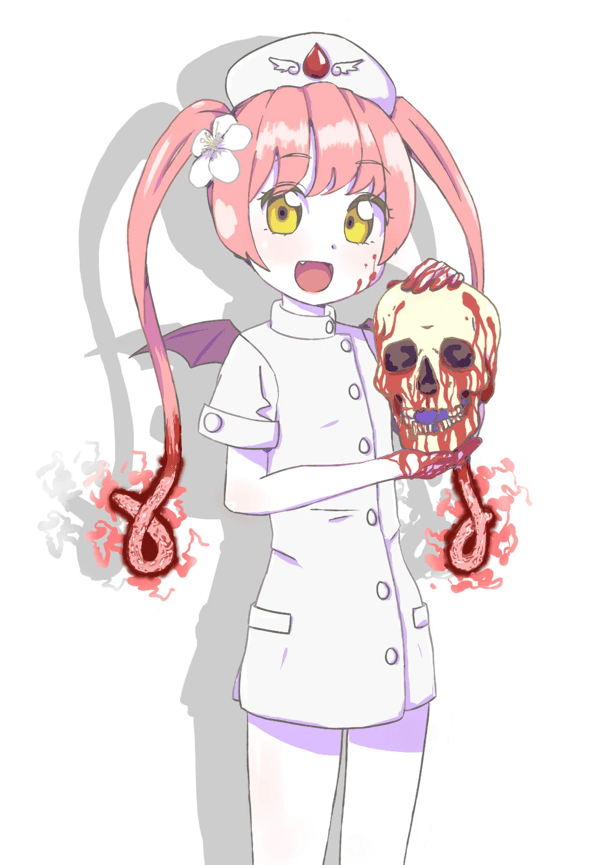
Image from Somethingchans Wiki
Ebola’s alleged awareness ribbon
As extensive as Wikipedia’s article on Ebola-chan is, it does not note that Ebola-chan had an awareness ribbon, which was uploaded by an otherwise inactive Wikipedia editor to Wikimedia on October 10, 2014.
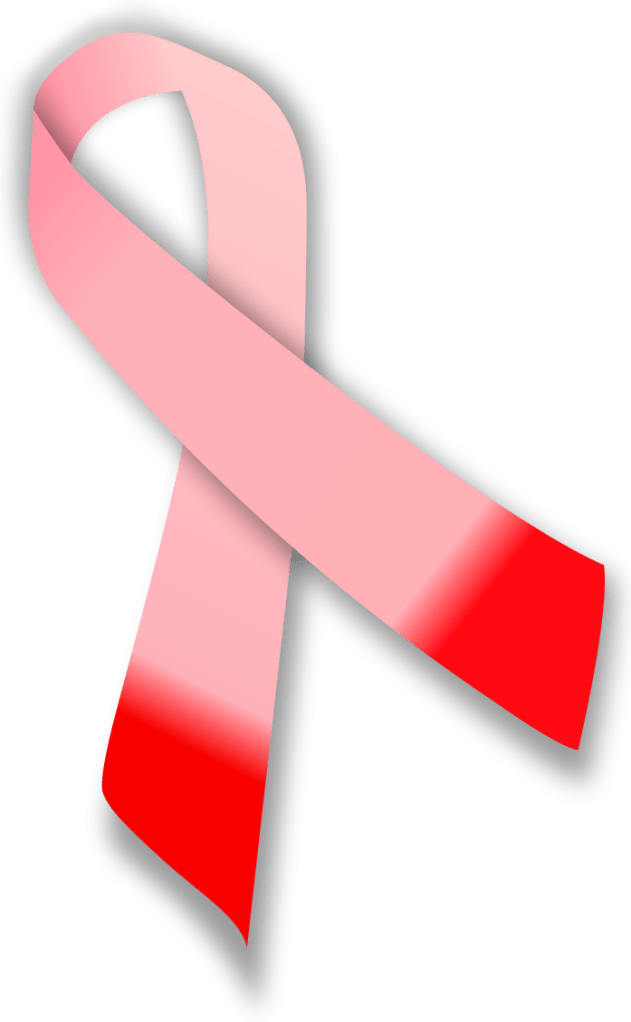
Image from Wikimedia
Ebola-chan’s most distinctive visual feature is its hair, which is pink with reddish representations of the Ebola virus at the ends of its pigtails. The awareness ribbon is thus referencing Ebola-chan in a way only an audience very familiar with the meme would be likely to recognize.
The Wikimedia page for the ribbon fails to note that this mocking “awareness” ribbon originated in a morbid, racist social media trend, and that the ribbon was—presumably—made as a way of spreading awareness of the Ebola-chan meme, not of the epidemic or disease itself.
Given the niche visual language in which the ribbon is participating and the lack of contextualization in its Wikimedia page, it’s unsurprising that it would appear alongside ordinary awareness ribbons in the Romanian Wikipedia’s list of awareness ribbons. A meme created to praise an epidemic as it raged across West Africa had become, simply, the Ebola awareness ribbon.
In however minor a way, the Ebola-chan fan who created this symbol to mock victims of an epidemic demonstrated that the awareness ribbon trend had surpassed a threshold of incomprehensibility.
An earlier and more extensive version of this article was first published at Virginia Weaver’s personal newsletter.
 THE CAROLINIAN