
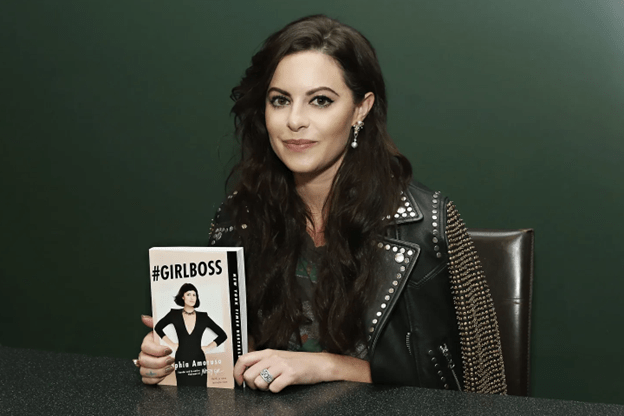
Headline image features Sophia Amoruso with her bestseller (source)
Virginia Weaver, Senior Staff Writer
Microwaved Beef is a column by Virginia Weaver that reflects on flashpoints from the last few years in the culture wars. The rapid pace of contemporary discourse makes it easy to forget critical moments and trends that have defined our social and academic lives. Microwaved Beef brings those moments back into the spotlight.
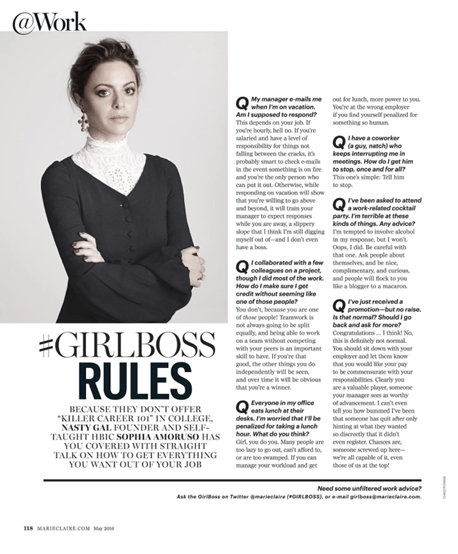
“Girlboss,” now a ubiquitous, if hollow term, was first popularized by entrepreneur Sophia Amoruso in her book of the same name, published in 2014. Amoruso founded Nasty Gal, an e-commerce company, in 2006, when she was 22 years old. At its peak, in 2015, Nasty Gal’s revenue was estimated at upward of $300 million. Amoruso also wrote an advice column, #GirlBoss Rules, at Marie Claire. She was the zenith of corporate success and a rising guru. The term girlboss was hers, and it was her – for a year or two.
Although most onlookers in 2015 assumed Nasty Gal’s success was continuing unabated, the company was not looking so great internally. Amoruso, around whose personality the company was built, stepped down as CEO in 2015. In November 2016, Nasty Gal declared bankruptcy. As reporting at the New York Times pointed out, Nasty Gal had been dogged by lawsuits, and most outside observers had forgotten that “growth and solvency are two different things.”
Worst of all for Amoruso’s image was that Nasty Gal’s management had allegedly not been accommodating to their women employees’ needs.
In 2015, Aimee Concepcion sued the company for laying off her and two others just before they were set to take maternity leave, while Farah Saberi claimed in a lawsuit that she was let go because she came in late to work and took a five-week leave after she was diagnosed with a kidney disease.
In April 2017, reflecting on Nasty Gal’s catastrophic fall from grace over the previous two years, Amoruso revealed she had also been going through a divorce at the time: her husband had opted to end their one-year marriage just before Nasty Gal’s bankruptcy announcement. As a bitter twist, the announcement had come as Amoruso was touring to promote her second book, Nasty Galaxy (2016), a coffee table book in which the entrepreneur provided life tips and shared inspirational quotes.

In the same 2017 article, Amoruso wrote:
This April a Netflix comedy series based on my 2014 best-selling book, #Girlboss, will be dropped into 95 million homes in 195 countries and translated into 30 languages. The amazing actress Britt Robertson stars as the protagonist (named Sophia), Kay Cannon wrote it, and Charlize Theron is an executive producer. It’s both a gift and a surreal exercise to know that I’ll be watching the last decade of my life play out on TV for the next year or years (fingers crossed for Season 2).
The show flopped and was not renewed for a second season. Laura Bradley speculated at Vanity Fair that Girlboss was the first show Netflix had ever cancelled due to poor reception rather than financial concerns. In that moment, more than just the show Girlboss had ended. The brief cultural reign of the girlboss herself, Sophia Amoruso, had come to its resounding close.
In 2021, the meme phrase “gaslight, gatekeep, girlboss,” a parody of “live, laugh, love,” emerged on Tumblr and instantly cemented itself as Amoruso’s most enduring cultural legacy.

“Girlboss,” which Amoruso had popularized in 2014 as a term for corporate feminist empowerment, has become sedimented in the cultural imagination as an ironic joke. Not long after its birth as a meme, TikTok saw the emergence of a popular new phrase: “She girlbossed too close to the sun.”
In mid-2022, Amoruso posted on X: “Please stop using the word Girlboss thank you[.]”

This article is revised from an essay originally published in Virginia Weaver’s personal newsletter.
 THE CAROLINIAN