
Kaylee Roberts, Senior Staff Writer
North Carolina remains the last state in the country without a finalized state budget months after its expected deadline. This leaves funding decisions unresolved, as well as increased concerns about the broader impact on public services and higher education. As lawmakers continue negotiations, it is important that UNC Greensboro staff and students pay close attention to how state level delays could affect the future.
A state budget determines how money is allocated across sectors such as education, healthcare, and infrastructure. The NC Budget and Tax Center highlights that the state budget is the biggest way our state leaders can “enact North Carolina’s values.” These values not only include overarching wants like accessible public transportation and well-staffed schools, but smaller standards such as strong local businesses.
Without a new agreement, North Carolina continues operating under a previous budget, limiting the introduction of new programs and delaying potential funding increases. According to Matthew Burkhart, writing for Technician, the ongoing stalemate stems from disagreements among state leaders over priorities, including tax cuts and additional funding for a children’s hospital. Due to prolonged negotiations, there is no clear timeline for when a new budget will be approved.
Teachers across the state are feeling the effects of this issue. Their salaries are frozen, and there is growing concern regarding K–12 schools and their ability to buy classroom materials. Mary Jane Bowman, a Person County educator, critiqued North Carolina’s leaders for failing to meet the July 2025 deadline to approve the state budget. “Without proper compensation, your morale just erodes,” she said.
In a speech to the Charlotte Regional Business Alliance, North Carolina’s Governor Josh Stein expressed his concern regarding the budget stalemate. “The state has kept operating at this baseline, limping along… If we accept the status quo, we risk losing our competitive advantage that we’ve worked so hard to achieve,” he said, as reported by Mary Ramsey for The Charlotte Observer. Relatedly, Will Doran of WRAL also reported on Stein’s proposal for funding North Carolina’s “immediate needs,” including Medicaid.
Because the issue originates at the state level, its effects have extended to universities across the state. State funding plays a significant role in supporting higher education, influencing everything from tuition levels to campus resources.
One area of concern is the potential impact on financial support systems. Scholarships, grants, and other forms of aid are often tied to broader funding decisions, and uncertainty at the state level can complicate how these resources are distributed or maintained.
Students at UNCG have shown increased concern regarding the affordability of college and confusion surrounding the lack of clarity and communication from state leaders.
Senior Karis Hudgins expressed concern regarding the future for students across the state, saying, “What worries me is the uncertainty this is creating.” Hudgins continued, “[I worry] how budget cuts will affect the educational quality for students across the state. I’m concerned for myself, my peers, and upcoming college students.”
However, this situation goes beyond state aid. Resources that students use every day, such as academic tutoring centers and mental health counseling, are at risk, with the potential to have funds cut or frozen as the stalemate drags on.
Broader national economic policies can also shape conversations around state budgets. Proposals and tax policies such as the OBBBA signed by President Trump in 2025 have emphasized reductions in funding to both Medicaid and SNAP, the largest federal anti-hunger program in America. These larger debates are sure to influence how North Carolina state lawmakers approach budgeting decisions.
Until an agreement is reached, uncertainty will persist, leaving institutions and residents awaiting clarity on how state money will be assigned in the months ahead. For students and staff at UNCG, staying informed on these developments is a key step in navigating that uncertainty. The budget conversation is likely to continue when the General Assembly’s short session begins on April 21, 2026.
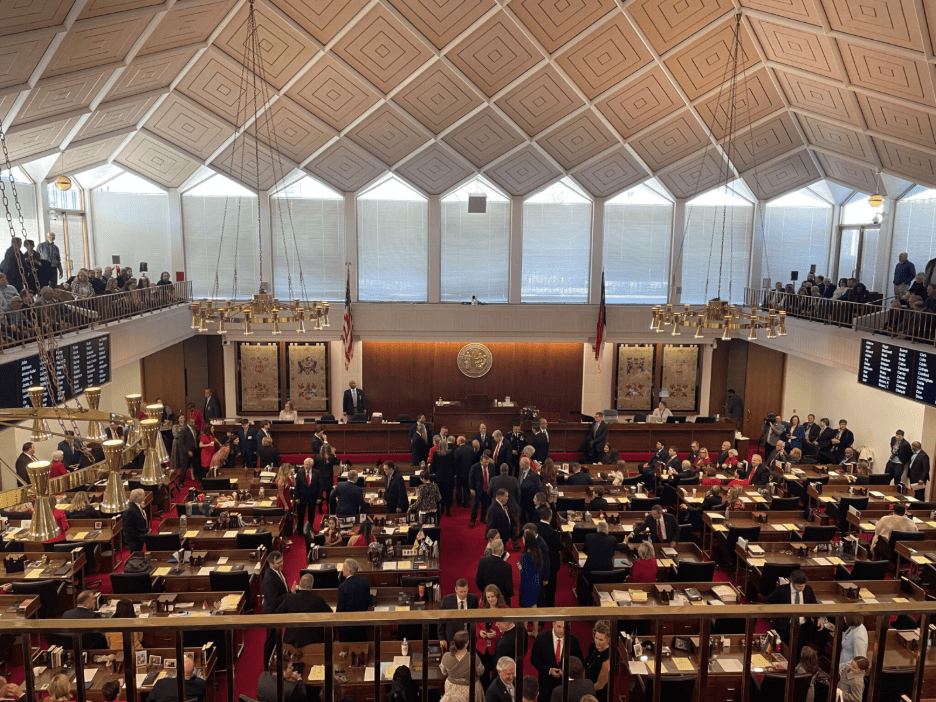
Headline image: Ben Humphries/EdNC

