
Imani Tailly, Senior Staff Writer
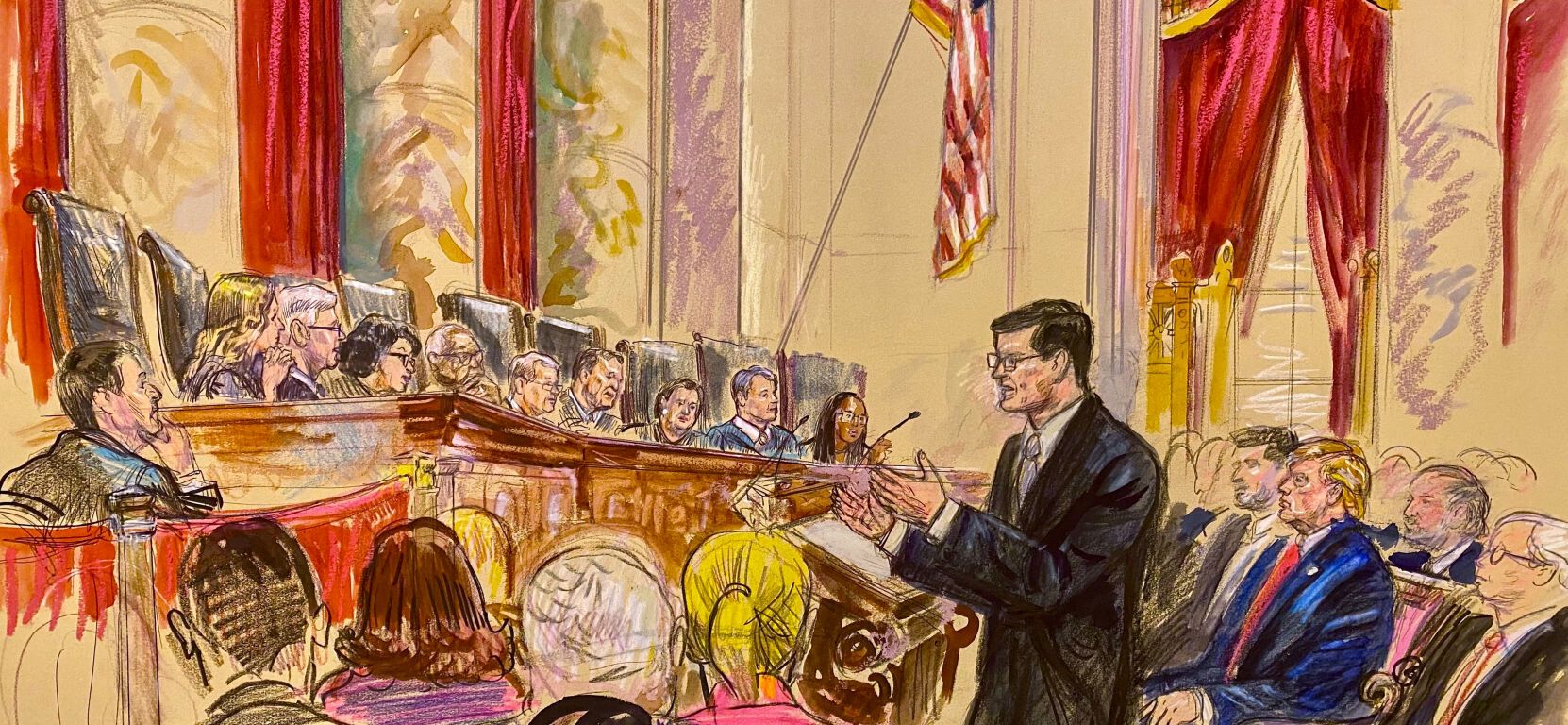
On April 1, 2026, the Supreme Court heard arguments on whether there will be restrictions placed on birthright citizenship, and the disposition of this case stands to have major impacts in our country.
On January 20, 2025, President Donald Trump released the “Protecting The Meaning And Value Of American Citizenship” presidential action. The executive action argues the Fourteenth Amendment “has never been interpreted to extend citizenship universally to everyone born within the United States.” The statement goes on to say that people born of parents “unlawfully present in the United States” should not be given documents recognizing them as citizens, nor should documents given by “state, local, or other governments or authorities purporting to recognize United States citizenship, to persons” be accepted.
Despite Trump’s claims that the Fourteenth Amendment does not include “everyone born within the United States,” the Fourteenth Amendment says, “All persons born or naturalized in the United States, and subject to the jurisdiction thereof, are citizens of the United States and of the State wherein they reside.”
This should be cut and dry. However, the Trump administration and U.S. Solicitor General John Sauer, who argued on April 1in favor of restrictions on birthright citizenship, will work to make this an uphill battle. The Trump administration’s arguments for this change struggle, and some are simply untrue. Sauer stated in court, according to a Fox News article, that the United States is “an outlier among modern nations” for having birthright citizenship. Sauer also claims that “every nation in Europe has a different role in the notion that they have a huge humanitarian crisis, as a result of not having that restricted birthright citizenship.” President Trump, on his social media platform Truth Social, said that the United States is the “only Country in the World STUPID enough to allow ‘Birthright’ Citizenship!” Pew Research Center shows, however, that thirty-three countries around the world have birthright citizenship, with the majority being fellow Western Hemisphere countries like Canada, Brazil, and Mexico. The data also shows that no nation in Europe has total birthright citizenship.
Another side of the Trump team’s argument revolves around the word “domicile.” Domicile is defined by Merriam-Webster as a “a dwelling place: place of residence.” But this definition was called into question by Supreme Court Justice Samuel Alito, who asked Sauer how the term applies when someone believes they have set up a home in the United States. The previously mentioned Fox News article reports that Justice Alito explained his concerns of this being a “humanitarian problem,” as people who may be here illegally have, “in their minds, made a permanent home here and have established roots.” In response, Sauer questioned whether it is possible for someone who is in the United States illegally to create a home, arguing this removed the question of it being a humanitarian issue.
Trump’s fight for this change could also lead to an increase in the undocumented population in the U.S. In a study from The Migration Policy Institute shared by CNN, the undocumented population in the United States could rise by 1.1 million in twenty years if this change occurs. The immigrant population is expected to decline due to deaths and people returning to their home countries. With a major stance of Trump’s being to lower the immigrant population in the United States, this step to end birthright citizenship could be very counterproductive.
This case could have major impacts on the people of Greensboro. Census Reporter shows that Greensboro has an estimated foreign-born population of 42,917, with the majority being from Latin America at 12,807. Should birthright citizenship end, we could see many of our neighbors lose their status as citizens. The executive order itself is not retroactive, but if the Supreme Court allows it to go into effect, the date of that effect could be February 19, 2025. This isn’t limited to people from Latin America; this could also impact the 11,840 immigrants from Asia, the 10,019 from Africa, and more. This puts many Greensboro residents in a risky and possibly dangerous situation, with deportation or even worse outcomes looming, as we have unfortunately seen in incidents involving ICE and Border Patrol.
This issue also impacts UNCG, which accepts 700 international students each year and, based on data from 2023, has over 600 students that are not US citizens. For students who are not US citizens, this could lead to the end of their higher education journey. For international students, if they were to have children while studying abroad, their children would no longer be recognized as U.S. citizens.
The ACLU and its legal director Cecillia Wang have received support from across the United States. Their petition in defense of birthright citizenship has received over 350,000 signatures. With the Court’s final decision not expected until late June or early July, it will be some time before we learn what will happen.
Headline image by Dana Verkouteren – FR31454 AP.

