
Virginia Weaver, Senior Staff Writer
Microwaved Beef is a column by Virginia Weaver that reflects on flashpoints from the last few years in the culture wars. The rapid pace of contemporary discourse makes it easy to forget critical moments and trends that have defined our social and academic lives. Microwaved Beef brings those moments back into the spotlight.
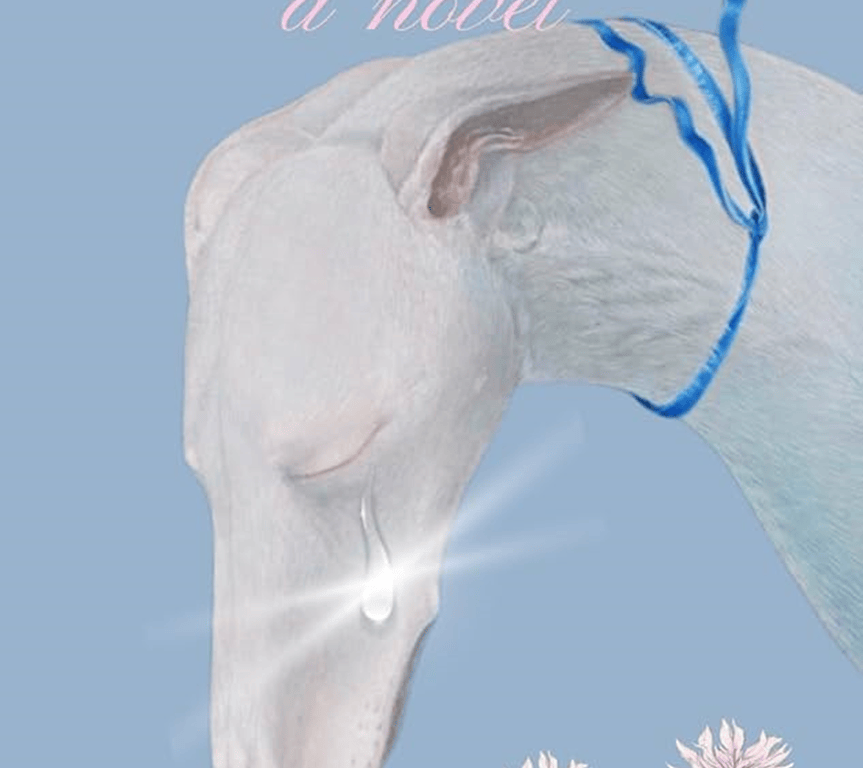
In November 2025, Hachette, one of the world’s largest publishers, launched Mia Ballard’s horror novel, Shy Girl, onto shelves in the UK. As with an increasing number of novels picked up by mainstream publishers, Shy Girl first found an audience as a self-published novel. The novel’s contents were primed to spark discussion. Its plot centers on a young woman in financial distress who finds an older man willing to cover her expenses if she will live as his pet, which may well have generated heated discussion concerning gender politics and the fate of feminism in literature.
Instead, Shy Girl found the spotlight when it became clear to many readers that the work was either fully written by generative AI or that Ballard had relied heavily on AI to assist her writing process. As recounted by Kate Lindsay, host of Slate’s popular online culture podcast ICYMI, suspicion about Shy Girl’s AI provenance first arose on Reddit and culminated in an in-depth critique on YouTube, “i’m pretty sure this book is ai slop,” by the popular channel frankie’s shelf, which hit the web on January 19, 2026, and has since surpassed two million views. Frankie’s criticism of Shy Girl led more readers to investigate, and eventually, even though the novel was already on shelves in the UK, a general consensus was reached: Shy Girl is AI slop. In the wake of this revelation, Hachette canceled Shy Girl’s US release and pulled it from distribution online and in the UK.
Speculation and concern over how such a massive publisher could be duped by AI slop, which was easily spotted by amateur readers, simmered across the Internet. A spokeswoman from Hachette, cited in the New York Times coverage of the incident, claimed, “Hachette requires all submissions to be original to the authors, and asks authors to disclose to the company whether they are using A.I. during the writing process.” Their editorial process clearly did not enforce this policy, however airtight it might be in theory.
How AI content found its way into Shy Girl is still not a settled matter. Ballard, the novel’s ostensible author, alleges that an acquaintance who edited her draft had utilized AI but that she had not used it herself. In an exchange with the New York Times, Ballard wrote: “This controversy has changed my life in many ways and my mental health is at an all time low and my name is ruined for something I didn’t even personally do[.]” However, even if Ballard did not use AI herself in writing Shy Girl, she clearly allowed AI writing to remain in the novel after what were surely several further drafts on its way toward mainstream publication. What is most important is that nobody seems willing to deny that AI material forms a significant part of Shy Girl, regardless of how it got there.
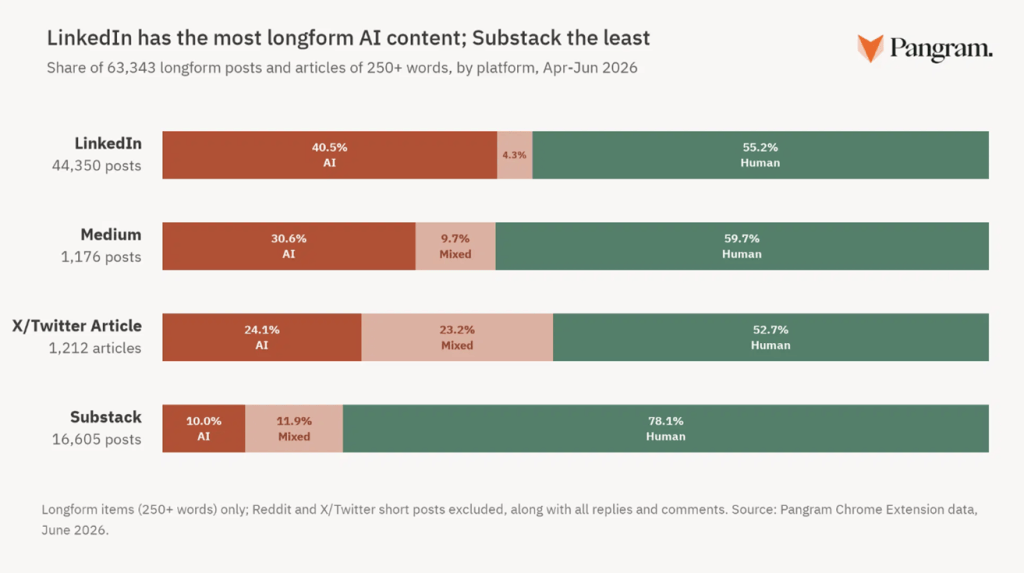
Concerns over AI slop have reached a fever pitch over the last few years, with Merriam-Webster naming “slop” as its 2025 Word of the Year. Generative AI has hit education, journalism, publishing, and other writing-intensive industries hard, with AI-generated writing’s promise of big results for minimal effort proving difficult for many writers to resist. AI detection company Pangram recently released a study of the prevalence of AI content in longform writing on social media, finding that on LinkedIn, almost half of longform content posted is AI-generated. It is worth noting, however, that no AI detection software is perfect and that Pangram has an official partnership with Substack, which it found to have the lowest prevalence of AI-generated content of the platforms it assessed.
Since the cancellation of Shy Girl, other incidents of alleged AI slop have exploded into the news, including in the mainstream publishing industry, yet again. In July 2026, Deadline reported that another novel, Call Me, I’ll Hide the Body, had been pulled by its publisher, Minotaur/Macmillan, after allegations surfaced that the novel was AI-generated. Sources close to the subject claimed that the publisher had acquired the novel for well over two million dollars and that production companies were already pursuing film rights to adapt the still unpublished novel to the screen. Again, how a novel that amateur readers recognised as AI made its way through mainstream publishing’s harshest gatekeepers is unclear. More broadly, what remains unclear is how the publishing industry will improve its AI-spotting game, and how well it will be able to retain the trust of readers going forward.

