
Brittany Hilliard, Sports & Gaming Editor
Have you ever thought about what it would be like to literally be inside a video game? For some people, that idea will become a reality. To celebrate the 30th anniversary of the Pokémon franchise, NOT A HOTEL and the Pokémon Company have collaborated to build a life-size poké ball for selected guests to stay in that overlooks a beautiful lake in Tomakomai City, Japan. Poké balls—red, white, and black colored orbs—are hunting devices used to capture Pokémon in the video games that later spawned comic books, a trading card game, an animated series on television, and films in the 1990s. The massive Poké Ball features a large round bed, giant window, and bathroom for guests to enjoy. Because it has those qualities, the Poké Ball is an inhabitable space that is both inspired by video games and one that allows guests to physically dwell within that medium.
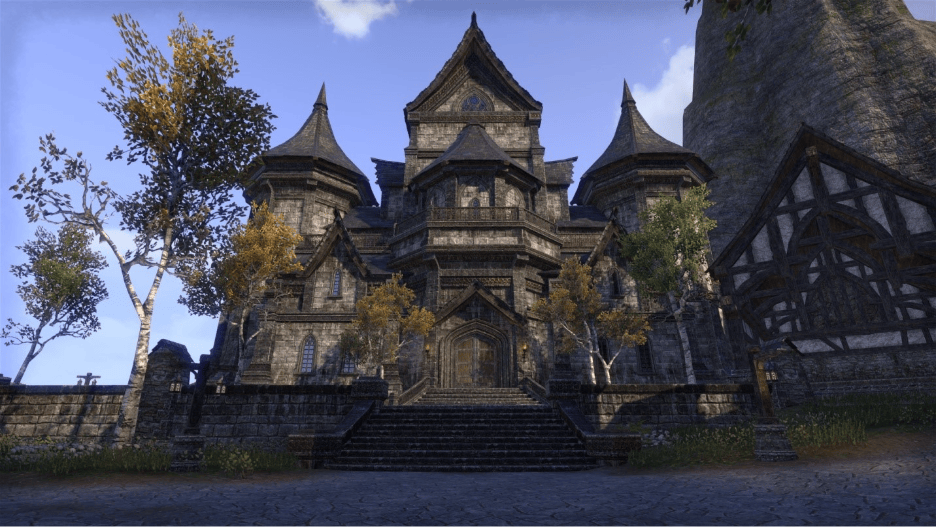
Of course, players have been able to virtually dwell within video games for years. Indeed, several past and current video games permit players to construct and purchase their own domains for their avatars. From simulation games to roleplaying games, players have been able to put down roots and customize personal spaces because of the options game developers offer. Minecraft, The Sims, Second Life, Stardew Valley, Fable, The Elder Scrolls, and even the Mafia games are just a few instances of titles and franchises that enable players to inhabit their own virtual residential properties. The Elder Scrolls: Online, for example, has a total of 121 houses that the player can buy with either in-game gold or crowns which can be obtained with real money. While some of those houses are only available during certain months, many are available year-round and all of them permit gamers to decorate them with a wide range of furnishings. Each game update frequently adds new houses to the game as well. Moreover, those houses have diverse architectural styles that reflect the different regions of Tamriel, the game world. To enhance the options game developers provide, video game modders also create mods for games that recolor the properties players can buy, add different types of furniture for players to choose from, improve the functionality of existing houses, or implement entirely new houses for players to occupy.
Because of the significant number of games that include houses for players and the active engagement players have with that aspect of gaming, it is worth asking why players value the ability to own and customize those virtual spaces. In short, what exactly is it about player housing that appeals to players so much, and why do they continue to be drawn to it? Game scholar Daniel Vella sheds light on the phenomenon by studying how players elect to spatially interact with their game worlds. He discusses two modes of dwelling—hestial versus hermetic—which describe how players either prefer to linger in one location for extended periods of time or travel across a game world to different areas. After establishing that framework, Vella argues that hestial-oriented players view player housing as a “private sphere” that is “a cradle of identity and selfhood.” Like people do with houses in the non-virtual world, players can obtain items in game worlds such as trophies, books, weapons, and armor that they can then display and store in their digital houses however they like. Those items are representative of the specific experiences and memories players have had while exploring the game world and their achievements within it. The types of furnishings and structural objects that gamers use to alter their houses also allow them to personalize those spaces to fit their particular aesthetic tastes. Those abilities then enable players to have complete control over certain parts of their game worlds in ways that can be privately enjoyed or shared with friends and family. Finally, player houses are crucial venues for self-expression and creativity in which gamers can artistically impact their game worlds.
As a player who purchases, builds, and spends much of her time in video game houses, I can attest to Vella’s observations. In general, I have always enjoyed collecting houses in games because I like having a variety of places where I can go and change whatever I want. I have spent countless hours buying or gathering materials to make furnishings and structural objects for my properties. Furthermore, I meticulously place objects in each garden or room because I want them to be arranged absolutely perfectly. Although I dwell in some of my houses more than others, I love that all of them offer me familiar places where I can feel comfortable because they reflect my own desires and their items remind me of exciting quests I have completed or battles I have fought with friends out in the game world. For those reasons, player housing is not simply a system that permits players to have increased power in video games. Rather, player-owned houses are digital manifestations of gamers’ hearts and souls that make their games feel like home.
Headline image from UESP

