
Piper Summey
“The dance floor is dead”
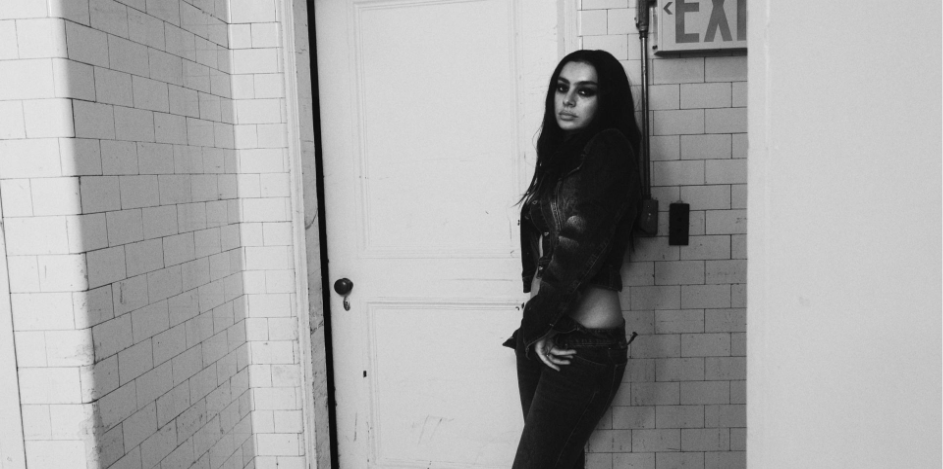
Charli XCX sings this line to start off the debut single of her latest record, Music, Fashion, and Film. Odd, given that just two years ago, the hyperpop pioneer seemed to be at the center of a summer-long dance party as her album BRAT not only garnered more critical acclaim than her past releases but also created a cultural phenomenon through its subversive but surprisingly marketable aesthetic. Social media influencers even dubbed the summer of 2024 “BRAT Summer.”
Now, Charli faces the daunting task of following up BRAT’’s undeniable success. The Guardian writer Laura Snapes poses the question: “how do you follow up the album that made you a star—and a caricature?” BRAT established Charli as the party girl who’s putting the hot in hot mess—a coke-sniffing, club-crawling, unapologetically trashy icon. But as she proves on this new record, Charli refuses to be boxed in, even by her own past.
“We’re walking on a runway that goes straight to hell”
Just like in this line from “SS26”, there’s a strong attitude of nihilism across the record as Charli critiques the industries named in the album title, stripping them of their prestige to reveal their ugly sides. For instance, on the song “Card Declined”, Charli rattles off a shopping list in a monotone voice like a burnt-out Barbie doll who’s jaded by the consumerist culture she’s come to represent. The shopping list consists of typical fashionista items like jewelry, shoes, and handbags, but it also contains a smile, a personality, and “a whole backstory”, at which point the shopper’s card declines. Here, Charli exposes the shortcomings of our materialistic culture by acknowledging fashion as a coping mechanism—an ultimately insufficient one. Of course, as a model, she’s also implicating herself here, but as we explore the album, you’ll find that Charli never shies away from self-contradiction. Does this make her a hypocrite or a human? I favor the latter.
“It’s the only way to feel like I’m not actually me”
The film industry is the next victim of Charli’s scathing insider commentary. On the song “Camera”, Charli—who has recently dabbled in acting—confesses how she uses this new passion as a form of escape from her own overwhelming identity. She admits to having the impulse to throw away her music career and focus on acting, an art which she describes as “something new and undiscovered, and something kind of violent.” To me, these lyrics portray acting as a process that involves killing off one’s personal identity to metamorphose into someone new, which would naturally be appealing to someone who self-identifies as insecure and “craving an experience that feels dangerous.”
“I’m a wife, I’m a kid, I’m destroyed, I’m a bitch.”
There are plenty of identity crises to be found on this record, like in the above lyrics from “I’m Afraid”, where we see the many facets of Charli’s identity clashing in a storm of paralyzing self-doubt. On past albums, Charli has wrestled with her party girl persona and how it functions as a coping mechanism for her underlying insecurities, but now, as she approaches midlife, she realizes that she’s not a “girl” anymore. She’s faced with pressure to mature while knowing the risks this poses to her commercial appeal and relatability as a female pop star. Plus, being a grown-up is hard.
On the playful third single, “Wink Wink”, Charli comically depicts the dichotomy between her youthful, messy personality and the dignified, mid-thirties woman she’s expected to be. This song also seems to refer to her BRAT-era persona with the chorus’ line “I’m not a bad girl anymore, I promise,” before the cheeky ad lib of “wink wink.” Charli seems to giggle at the idea of reforming her old ways while sarcastically singing the words “people can change.” This track illuminates the fact that—despite her age and her declaration that “the dance floor is dead”—Charli isn’t fully ready to let go of her brattiness.
“As I was lying there on the sidewalk, I did not think about art at all”
The closing track of the record contains its only featured artist. And it’s not Troye Sivan, Kim Petras, or any other one of Charli’s frequent collaborators. It’s not even a musician. The sole feature on “No One Lasts Forever” comes in the form of a recorded conversation between Charli and the film director and screenwriter David Cronenberg. After listening to the record, I can confidently call this feature my favorite in Charli’s discography. In the snippet of audio, backgrounded by an ambient soundscape, Cronenberg describes an unspecified near-death experience and the thoughts that went through his mind during what he believed to be his final moments: “I wasn’t thinking about art as endurance—as immortality”, says Cronenberg, “I mean, we can talk about immortal artists of various kinds and it can turn out that, yes, some artists have created art that really has survived thousands of years”… “but experientially for them, they are dead. They are gone.”
Cronenberg’s words really put Charli’s seemingly careless and at times apathetic tone into perspective. As passionate as Charli is about her art, she’s not driven by the pursuit of legacy. She possesses the existential awareness that the concept of achieving immortality through art is a sham—it’s just another coping mechanism for artists faced with their own impending deaths. So, she doesn’t put out “timeless” music in the hope of remaining relevant forever. She puts out the music that matters to her in the ever-evolving present with full awareness that one day, no one will care. This knowledge doesn’t depress or deter her. Considering the condition of the art industry as she describes it, fading into obscurity might just be a blessing in disguise. As Cronenberg puts it, “oblivion is freedom.”


wow what a great piece! whoever wrote it must be pretty cool…
LikeLike