
Virginia Weaver, Senior Staff Writer
Microwaved Beef is a column by Virginia Weaver that reflects on flashpoints from the last few years in the culture wars. The rapid pace of contemporary discourse makes it easy to forget critical moments and trends that have defined our social and academic lives. Microwaved Beef brings those moments back into the spotlight.
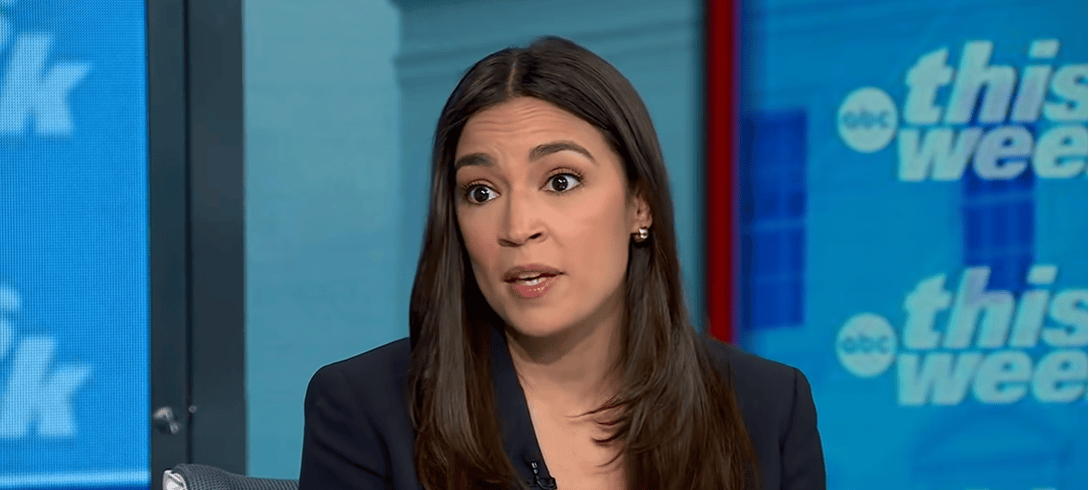
This summer, New York Representative Alexandria Ocasio-Cortez, one of the most prominent figures in progressive politics in the U.S., lit the internet on fire with her sheepish admission that “Woke 1.0 was crazy” in an interview for ABC. Representative Ocasio-Cortez made this remark—which was, in fact, a quotation from someone she knows—in the context of Francesca Hong’s embattled Senate campaign in Wisconsin. Hong had been excoriated across the web for some of her now notorious past remarks, such as tweeting that Thanksgiving should be cancelled and publicly scrutinizing the way that having a half-white child contributes to her continued “proximity to whiteness.”
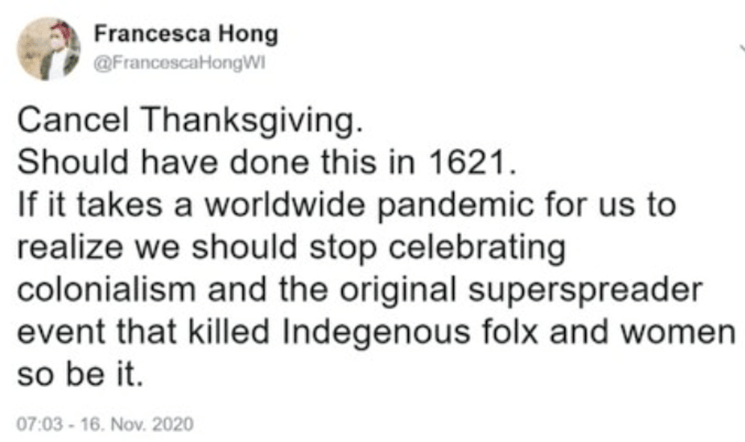
Francesca Hong serves as a useful stand-in for the concept of “woke” that has dominated many people’s vocabularies over the last few years. For instance, critics may associate her spelling “folks” as “folx” with wokeness. Given the increasing unpopularity of many ideas people associate with wokeness, it makes sense that Representative Ocasio-Cortez would want to put Hong’s stereotypically woke past positions behind her. Thus, Woke 1.0 must become a thing of the past.
But what is “woke,” exactly? The meaning of this term has been the subject of furious debate across the 2020s, with some right-wing critics using the term to refer to progressive politics in a broad sense and progressive critics claiming that popular use of the term erases its roots in Black intellectual history. Still other commentators have argued that the term’s popular usage has an obvious meaning and have grown frustrated with what they view as a political movement that attempts to avoid a label to avoid accountability.
Regardless of whether the term’s popular usage is faithful to its original intention, those skeptical of positions associated with wokeness circle key characteristics in discussing their object of critique. In a viral but deleted newsletter entitled “Of Course You Know What ‘Woke’ Means,” Freddie deBoer, a popular social and political commentator, argues that wokeness is defined by clearly definable characteristics, such as its roots in academic theories, its focus on language and emotion over material concerns, its valuation of “the superior virtue of the oppressed,” and its assumption that the answers to “all political questions are easy.” Representing an adjacent but distinct approach, pseudonymous online writer Cartoons Hate Her argues that wokeness was not a set of policy positions, but rather a set of behaviors: an approach to doing politics, notably through cancel culture, rather than a clearly definable set of stances. Certain episodes in the culture wars have become synecdoches of wokeness in popular discourse, too, such as Blackout Tuesday. Whether or not a term from Black culture should have been appropriated for critique of 2020s progressivism may be an important question, but for critics of 2020s Western progressivism, the term “woke” has distinct, if new and not always shared, meanings.
Less clear, however, is what Woke 1.0 was, given its implication that something has come afterward. What is “Woke 2.0,” if Woke 1.0 was cancelling Thanksgiving, posting black squares on Instagram, and spelling folks with an x? Representative Ocasio-Cortez received significant backlash for her admission that “Woke 1.0 was crazy,” from both Right and Left, but what interested many critics was not the “Woke,” but the “1.0.” Journalist and author Phoebe Maltz Bovy argues that Woke 2.0 could refer to a new moment of progressivism in which Jewishness, rather than whiteness, has become the predominant object of progressive critique, with anti-Israel activism serving as the sole or predominant focus of the new wave of wokeness since early 2024.
Only a few things are clear about wokeness. One is that the terminology surrounding it is embattled. Another is that the term “woke” often has clear meaning to the people using it, even if that meaning is not shared between users. And finally, it is clear to many commentators and some politicians that a vibe shift has happened. What first became known as wokeness has changed in some way since its heyday around 2020 or 2021. Representative Ocasio-Cortez’s remark about the craziness of Woke 1.0 set off a renewed round of debate about “woke,” but this summer’s wave of discourse is sure not to be the last.

