
Imani Tailly, News Editor
On October 9, 2026, an email was sent out to students regarding water discoloration on campus. The email was shared by Housing and Residence Life on behalf of the UNCG Facilities team. The water problems were explained as a city-wide issue impacting not just the university, but Greensboro as a whole. The water was determined to be safe for “general use” and that FIXT reports wouldn’t be necessary, but students who had “additional concerns” could submit one. Despite the assurance of safety, students are still concerned about the water quality on campus. The email stated that an expected resolution date had not been provided by the city. After two weeks without any follow-up information, The Carolinian reached out to both the university and the City of Greensboro for an update.
The Carolinian reached out to the City of Greensboro on Oct. 27 to find out more information about the issue and what’s being done to solve it. Mike Borchers, the director of water resources for the city of Greensboro, stated that water discoloration can be caused by many factors. He explained that UNCG receives water from the city at multiple locations and that the discoloration and smell could be a result of “rapid changes in pressure or flow” as well as “treatment and chemistry.” However, this was treated as an issue exclusive to UNCG and not the larger Greensboro area, which contradicts the email provided to students. In response to this inconsistency, the email from the university was restated alongside photos of what the water on campus looked like to clarify the issue. Mr. Borchers’ reply stated that “discoloration is typically localized and not something we experience across the distribution system,” which, again, did not match the information provided by the university.
Mr. Borchers then directed me to Mark Hill Jr., the laboratory superintendent for the City of Greensboro. Hill said that different types of disruptions in the water system can cause this including, “[a] watermain break, flow changes, and seasonal lake turnover.” An offer to have the water at UNCG tested was provided, which, again, suggested the issue was localized to UNCG. In my response to Mr. Hill, I reiterated that the issue was described as a citywide problem. I also explained that this issue is impacting the main campus as well as areas like the Spring Garden apartments and Spartan Village. A response has not been received as of Nov. 1, 2026.
When reaching out to the Housing and Residence Life (HRL) Department at UNCG, the department provided an article from the City of Greensboro website titled “Understanding Water Discoloration.” The website states that, “On September 30, 2025, the Water Resources Department held its first community meeting in southeast Greensboro to discuss water quality concerns.” This suggests that water issues have existed for over a year. In my response to Mark Hill Jr.’s email, this article was cited, along with a request for any updated information that could be provided.
Students who reached out about the water issue have shared similar stories. One student, whose water has been coming out brown, shared that despite their best efforts to clean, “the issue still persists.” Another student noted a foul, egg-like smell whenever they use their shower or sink. The smell has been reported to linger after the water has been used. Even students whose water has remained clear have complained of the smell.
It is unclear when the city will respond and whether they will provide any new information or assistance. In the meantime, students have continued to complain and voice their frustration and concerns about the water quality on campus. With two seemingly contradictory statements from the city and the university, it’s unclear what the true extent of the problem is and what is being done to solve it. This article is a step towards getting attention, answers, and information for students who have been left in the dark. As more information is provided, updates will be given.
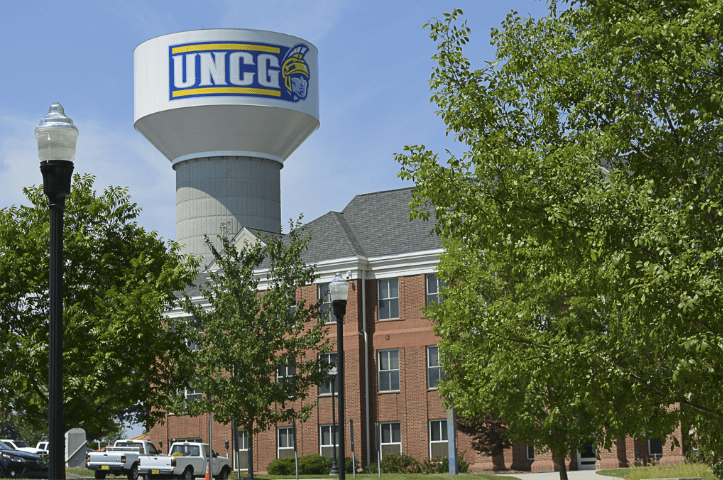
Headline image from UNCG.

