
Alison McKane
Staff Writer
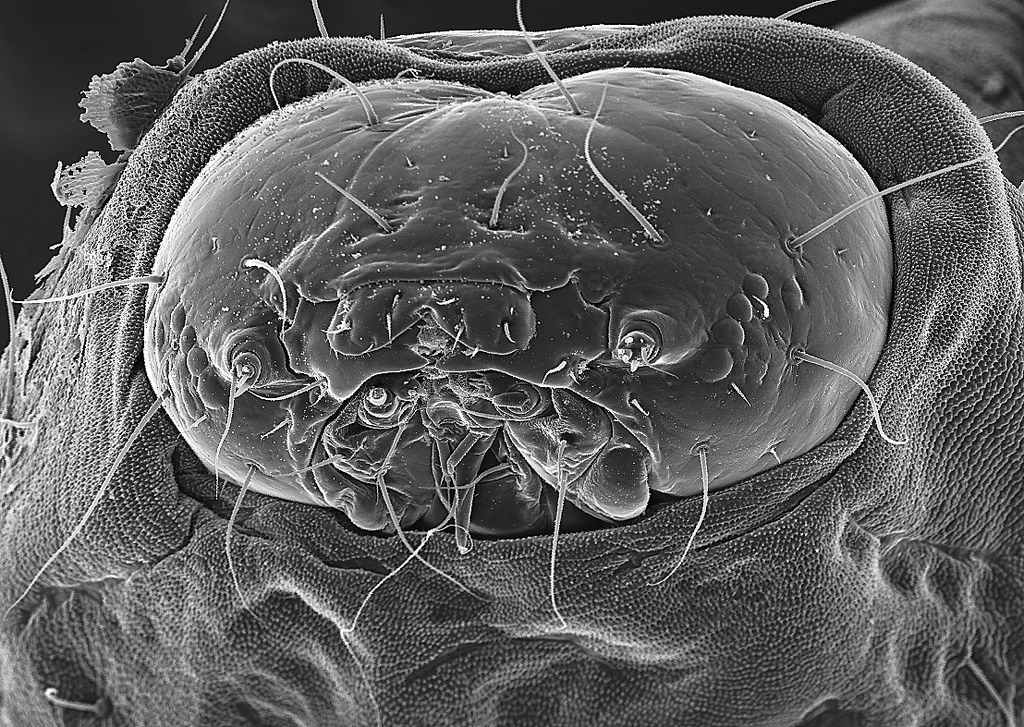
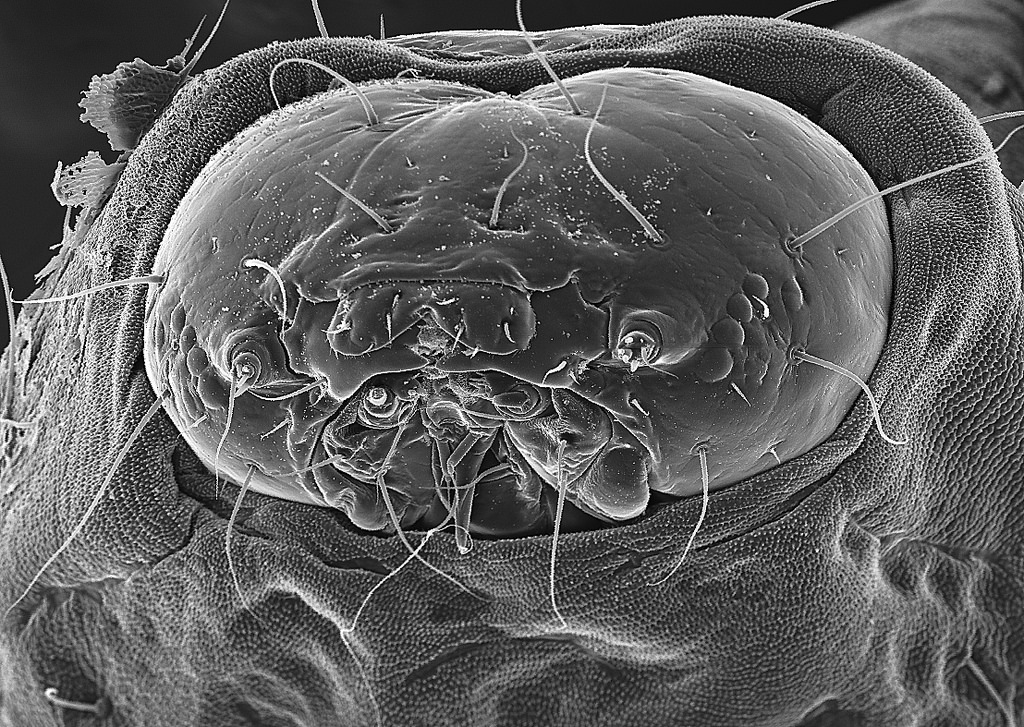
From Sept. 18 to Nov. 10, Greenhill hosted Microcosm, an exhibit composed of six artists’ work. Each of the exhibits was mostly created using SEM — scanning electron microscopes.
Invented in the 80s’, SEMs are the tools used for the artists’ images that are derived from microscopy. These images are called “photograms.”
Edie Carpenter, director and cultural and artistic curator at Greenhill, explained that these artists took on a persona of a hypothetical scientist, anthropologist or even entomologist. She went into detail about four of the six artists.
The first of the six artists represented in Microcosm was Mark Koven.
Koven used SEM to create prints on aluminum to replicate the look of a subject under a microscope when, in reality, the images which he created were manipulated and colorized to give “personality” to the images, as said by Carpenter. Koven called these images “microscapes,” as they had landscape features to them.
In addition, Koven created 3D prints of different organisms, blowing them up 100,000x their actual size. He created prints of viruses such as SARS and Salmonella.
In his Salmonella print, the combination of blue hues and fish-like construction of lines created an uncanny resemblance to what Salmonella looks like under an SEM microscope. The way Koven created the disease prints made them appear non-threatening, despite that both can be.
The final thing that Koven had on exhibit was titled, “Spit Culture.”
According to Carpenter, since the, “Exhibit was in its final days, the subjects were deteriorating, but it was to be able to give viewers a look into how SEM images look off of a print without having to use a microscope, as the images were projected onto a wall.”
Carpenter explained Koven’s thought process behind his work saying that, “Bacteria is the foundation and building block of life.” Carpenter clarified that as disease is bacteria, it is also part of the foundation of life.
The second artist was Daniel Kariko, a professor of art history at East Carolina University. His photographs were inspired by the insects found at his home.
Unlike Koven’s photos, the colors in Kariko’s were the actual color of the insects’ depicted. There were 6-8 layers of photographs, each of the edges painstakingly matched for the quality of the photo.
Carpenter described Kariko’s photographs as resembling ‘Dutch portraiture.’
“He labels them and gives them a Latin name,” said Carpenter, “he really captures the personality of the insects and has a familiarity with them.”
Carpenter pointed out an image of an ant in Kariko’s work, which she described as “young.” She went on to explain the inquisitive look of the young insect and, upon closer scrutiny, the specimen was difficult to ignore, with its head slightly cocked to the right, making eye-contact with those viewing it.
The third artist was Georgia Titcomb, the youngest artist, and the only one with backgrounds in art and science.
She took SEM images of a letter press of an amino acid sequence, specifically, the Beta Amyloid Sequence — the sequence scientists believe is responsible for Alzheimer’s.
In addition to image prints, she showed a video of what appeared to be the breakdown of the sequence of someone suffering from Alzheimer’s; this was captured in the breakdown of paper bags.
The fourth artist was Amanda Small, who, along with Mark Koven, was awarded the North Carolina Artist Fellowship.
Small began as a ceramic artist, and in her prints reflected this in creating SEM images that resembled ceramics, which Carpenter described as “revealing.”
Jeff Whitestone, the fifth artist, created a stop motion video at UNC-Chapel Hill titled, “Flame/Ablate.” It described the process of a SEM image being captured, especially something such as skin.
Carpenter described the process as “poignantly ironic.” People consider a photograph to be an act of preservation when, in the case of SEM image capture, it destroys the subject of the photograph.
The video footage shows the process of ablation, which, according to Carpenter, resembles landscapes.
Carpenter’s work was, in some ways, in striking contrast to that of Koven’s, who argued that all the showcased artists’ work depicted the building blocks of life. While this is a sentiment that Whitestone shared and depicted in his work, this idea manifested in the concept that SEM imagery destroyed the subjects that represented life.
All artists had different interpretations as to the meanings of their works. One thing the six artists agreed with, was capturing their art through imagery created or inspired through SEM.

