

Myo Thiha
English MA student
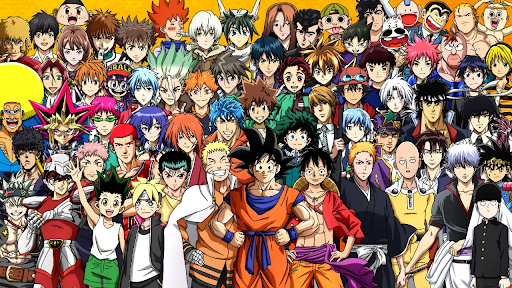
The manga/anime industry has been booming in the U.S. over the past decade. Previously reserved to auraless lunch tables and YouTube AMVs, the medium has grown exponentially due to streaming sites, social media, and accessible reading platforms. Between 2020 and 2021, Manga sales rose over 171% and now outsell American comics in the U.S. As a lifelong enjoyer of manga, it has been refreshing to see more people find interest in the medium. Still, the question arose of why it has appealed to so many people, especially Shonen manga, a subgenre aimed at adolescent boys ages 9 to 18. If you have read one Shonen manga, you’ve essentially read them all because of how formulaic they are.
Almost every Shonen follows the same narrative structure, with a relatively weak and powerless protagonist who grows and progresses throughout the series as they gain strength and make allies until they become strong and achieve their goals. Using the most popular manga, Dragon Ball, as an example, the series follows Goku. When the series begins, he is a young boy fighting low-level criminals and facsimiles of the Soviet Union, and he progresses to combat tyrannical, planet-destroying, fascist space emperors and galaxy-consuming gods. If every Shonen manga follows this structure of a weak protagonist journeying on a treadmill of self-improvement, why is the medium so popular?
It is because of this meritocratic narrative format that appeals to American readers. Shonen manga articulates what we consider the American dream. Someone starts at the bottom and climbs the social ladder through sheer determination and hard work to become successful. The appeal of Shonen manga is often that these narratives allow readers to remove their physical identity, societal traumas, and inhibitions as they put themselves in the protagonist’s shoes. Everybody in Shonen is judged on their contributions. Shonen manga tells us that if we are skilled and persistent enough, we will eventually succeed.
Shonen manga follows the same formula, offering readers comfort in knowing they’ll experience the protagonist’s meritocratic journey to success. The issue with this framing, as with the concept of meritocracy as a whole, is that it removes all social context and isolates the individual. In reality, every individual does not start from the same place—factors like race, gender, and social class matter in determining how successful you will become.
When consuming Shonen, it is essential to remember this distinction and not learn the wrong lessons from the medium. One can start noticing the flaws, intentional or unintentional, in the meritocratic narrative framework. Things are never strictly meritocratic, as other factors always contribute to the protagonist’s success. Let us examine Naruto for an example (spoilers ahead). The main protagonist, Naruto, dreams of becoming Hokage, the ninja organization’s equivalent of the president. Through his hard work and perseverance, Naruto eventually achieves his dream of becoming the Hokage of his village—after 700 serialized chapters. Along the way, Naruto establishes close friendships and earns the respect and reverence of the village that initially considered him a failure.
Naruto’s story is inspiring, and appeals to all the meritocratic tropes, but his success is not attributed solely to his achievements. We find out in the story that Naruto is essentially a nepo baby, as his father was also a Hokage. Not only was his father the Hokage, but he sealed an all-powerful nine-tailed fox demon into Naruto before passing. This entity blessed him with near-infinite chakra, the power system in the world of Naruto, and a currency of sorts in determining a ninja’s success. The more chakra you have, the more skills you can acquire and exhibit. Because of Naruto’s boundless chakra, he can fight any antagonist without running out of the currency he needs for combat. If that was not enough, we later discover that he is the reincarnation of one of two great ninja sages, which grants him even more inherited latent power. With all this in mind, we can see that the cards are all stacked in favor of Naruto’s success.
Could Naruto have achieved his dream of becoming the Hokage without these inherited powers? It is difficult to say. We love stories of meritocracy in real life and Shonen, but we must be realistic about how we consume these stories. Think of your favorite Shonen manga and consider whether a character’s success is their own or if some outside factors and influences contributed.
 THE CAROLINIAN
I’ve been thinking about this for a long time and as much as I love naruto and generally a good shonen, it is so significant to be able to identify the meritogracy myth in the animes and not let it affect they way you perceive reality. The problem is that, especially when you are young, it is really hard to realise all this and it can easily lead to internalising values.
LikeLike