
Bronwen K. Bradshaw
Features Writer

Image courtesy of Caitlin Wolper, Medium.com
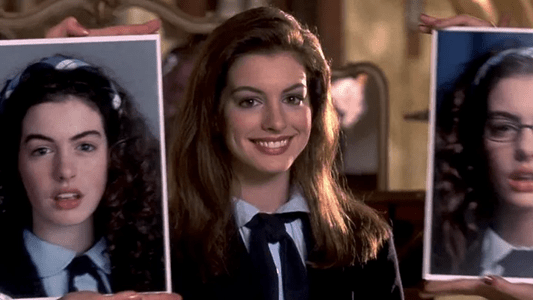
The stereotypical movie makeover montage was enthralling to me growing up. I remember watching Miss Congeniality with my mom, with Sandra Bullock’s Gracie walking out of her makeover as “Mustang Sally” played over her transformation. Clueless featured Cher and Dion giving Tai, the new girl in school, a full-fledged girly look. These scenes aren’t recent, either, as the 1980s featured scenes such as Ally Sheedy’s Allison undergoing an alteration of her goth look courtesy of Molly Ringwald’s popular girl Claire in The Breakfast Club. These defining makeovers enticed me, and I hoped to have my own movie makeover.
Now in my 20s, as I am growing into myself, I’ve realized the trope’s inherent sexism and how it upholds the narrative that women are valid once they throw on some lip gloss and a new wardrobe. The boy they like will finally notice them once they straighten their hair and present themselves with a newfound and stereotypical feminine look.
This trope relates to objectification theory, which Barbara L. Fredrickson and Tomi-Ann Roberts explain as the idea that women are more likely to view their own body and self-worth through the perception of others in society, mainly heterosexual men. In many films featuring women’s makeovers, the transformation is to a male-oriented idea of femininity.
For instance, Zach’s sister Mackenzie gives shy, nerdy Laney a makeover in She’s All That. Mackenzie tweezes Laney’s eyebrows (something Laney’s never done before), cuts her hair, and takes off her glasses. Laney comes down the stairs, where Zach awaits her big reveal. Most of the scene focuses on Zach’s reaction. Laney involuntarily changed her appearance for Zach’s approval, not her own, which the movie’s composition underscores.
The same could be said for Gracie in Miss Congeniality. She is tomboyish and focused on her job before having to go undercover at the Miss United States pageant. Her disregard for feminine ideals and beauty standards are considered flaws that women must correct. She is constantly disrespected and harassed by her male colleagues until she has to have the makeover. Only after her transformation does her colleague and love interest, Eric, start to flirt and think of her romantically.
The movie trope shows women that for someone to like them, they must change their appearance to appeal to the male gaze. Though many films uphold the makeover as positive, others let the characters revert to their old selves, using the makeover as a lesson to grow from rather than a new ideal.
In the 2004 comedy Mean Girls, Cady Heron transforms into one of The Plastics as part of her plan to sabotage Regina George. In joining the group, Cady loses her friends and eventually herself. At the film’s end, Cady no longer wears pink, resuming her look from the beginning. Cady’s makeover was instead a lesson about who she wanted to be and staying true to herself.
When I say it’s time to make over the makeover trope, I don’t mean that movies must abandon it. Instead of being about appearance, women can have changes that revolve around how they view themselves and grow as individuals. Instead of wanting Freddie Prinze, Jr., to drool or to look like a fairytale princess, the character should have agency over the choice and do it for her own reasons.
As audiences, we don’t have to stop watching these movies. I don’t think I could ever tire of Clueless and Cher and Dion’s fashion advice. But we need to understand the trope as a fantasy rooted in sexism. Makeovers won’t fix every problem, and that idea can lead to poor self-image and young girls, myself included, seeking unrealistic and problematic forms of validation. Everyone is worthy of feeling beautiful—glasses, frizzy hair, no makeup, and all.
 THE CAROLINIAN
I’m gonna go watch a classic makeover movie out of spite now.
LikeLike