
Karis Hudgins, Social Media Manager
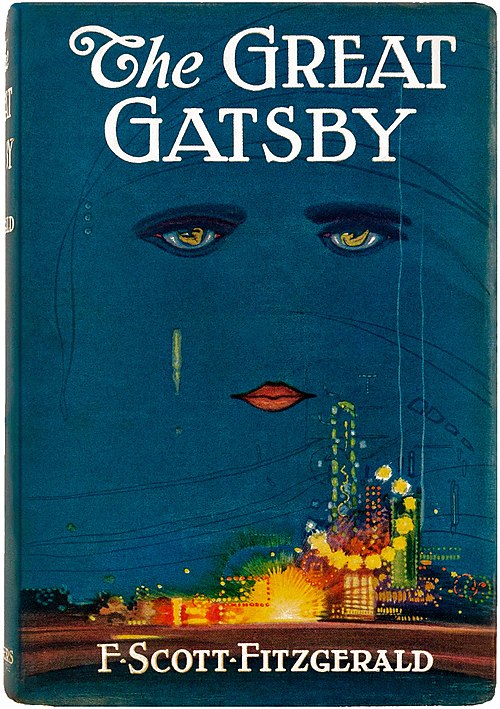
Anyone who attended public high school after 1958 has undoubtedly written an essay on the infamous glowing green light that appeared across the lake. My evidence? Before you even read the full sentence, you knew what novel I’m referring to: “The Great Gatsby.”
You’re also probably already having flashbacks to your English teacher chanting the word symbolism. So, what is it about F. Scott Fitzgerald that has allowed “The Great Gatsby” to have a chokehold on students and teachers everywhere for the past 60 years?
One of the reasons this novel has stuck around for so long is because Fitzgerald rarely does “subtle.” Instead, he gives us bold, cinematic scenes that have made the novel easily adaptable to the screen. That’s probably why there have been at least five film versions at this point.
Just think about the parties. Every weekend, Jay Gatsby’s mansion is turned into the social gathering of the century, filled with so much alcohol and dancing that it makes my head spin just reading about it. Hundreds of guests show up, yet no one actually knows Gatsby. In fact, most people attending only know rumors and incomplete stories of him, but who cares? The real performance is for the girl across the lake, the one who never shows up: Daisy Buchanan.
These parties are described so glamorously that they feel unreal, until we remember why Gatsby is hosting them at all: realizing that Daisy is the object of Gatsby’s performative efforts removes the glamorous appeal of his parties. Wow—that’s terribly sad and relatable.
The energy here is extremely similar to “party 4 u” by Charli XCX: “I only threw this party for you / I was hopin’ you would come through / Champagne pourin’ in your mouth / and I’m waiting for you by the window.”
I’d apologize for this comparison, but doesn’t it prove that even now, we still struggle with this same devastating feeling?
What makes Fitzgerald’s work so captivating is that he didn’t just write about yearning and the complications of love in the same way Ernest Hemingway or Jane Austen did. Rather, he understood it on a personal level. We can’t talk about Gatsby and Daisy, or even Scott Fitzgerald for that matter, without mentioning Zelda Fitzgerald.
Zelda wasn’t only Fitzgerald’s wife, but a focal point and inspiration in his literary work. They met when Fitzgerald was stationed in Alabama during WWI, and their relationship was instantly romantic and chaotic. It was rumored that Zelda didn’t want to marry a man who was financially unstable (sound familiar?), so Fitzgerald responded by publishing his debut novel, “This Side of Paradise.”
Published in March of 1920, this novel served as a commentary on love and money’s impact on relationships by illustrating the privilege of a man at Princeton University.
Fitzgerald became an instant hit at the ripe age of 23 with a novel that laid out the groundwork for his later books. Very soon after—and I mean very soon, as in April of 1920—Zelda and Fitzgerald were married and living in New York City during the peak of the jazz era.
To sum it up, their relationship was essentially the real-life story of “The Great Gatsby,” excluding the neatly written symbolism. The idea of chasing something just out of reach wasn’t a literary theme for Fitzgerald; it was his life.
During his time living in New York City, Paris, and Hollywood, his new, wealthy lifestyle ultimately pushed him to alcoholism. Additionally, Zelda faced mental health challenges, leading to hospitalization on multiple occasions.
Here’s where “The Great Gatsby” comes back in and why it’s continued to stick around. It’s not the excitement of the parties, the dancing, or excessive drinking that has kept it alive in classrooms; it’s the hollowness under all of it. Fitzgerald builds a world so extravagant that we may not think we can relate to it, but the more you read, the more familiar it becomes.
By the end of the novel (spoiler alert, but you should already know this), Gatsby’s dreams are completely crushed. The parties come to an end, the music stops, and the illusion of hope fades away. The hundreds of people that regularly attended his parties don’t even come to his funeral. What’s worse is Daisy, who was at the center of all Gatsby’s disillusions, doesn’t come either. The absence and loneliness are so overwhelming; it begs the question: was it always there?
The biggest gut punch of the entire novel? The story isn’t really about Jay Gatsby, Daisy Buchanan, or even Nick Carraway. It’s about us: anyone who has ever dared to love, reached for something just too far from our grasp, or romanticized the past. Fitzgerald didn’t write a novel about wealth and love; he wrote a novel about the persistent hope we all have for what once was, or who someone once was.
All that to say, students will probably continue writing essays about that glowing green light and whoever was driving the car forever. Because whether we like it or not, Fitzgerald kinda nailed the illusion of the past and loneliness in a way that we can all relate to.
Headline image from Wikipedia

