
Imani Tailly, News Editor
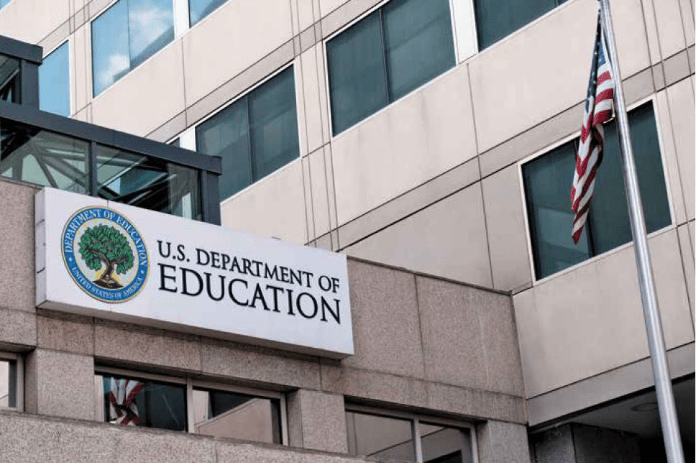
Beginning in July 2027, a new rule will take effect that determines the funding colleges and universities receive. This rule change, a part of the Trump administration’s larger campaign promise to overhaul the Department of Education, changes how accreditors determine the colleges’ and universities’ eligibility for federal funding. These changes include allowing new accrediting groups easier access to federal recognition, allowing universities the opportunity to choose accreditors that align with the school’s mission, an increased focus on student outcomes after graduation, among others. Referred to on the Department of Education’s website as “the final rule,” concerns have risen over politics influencing which schools get funding and the impact on free speech on college campuses. Bob Shireman, an accreditation expert with the Department of Education under former President Barack Obama, said in an article published by NPR, “This rule gives [the Education Department] the authority to meddle in the internal affairs of colleges and universities in ways that they never have been able to in the past.”
This is one of many changes that the Trump administration had promised during the 2024 presidential campaign involving the Department of Education. In a campaign video from 2023, Trump referred to changes in the college accreditation system as his “secret weapon.” In the same campaign video, Trump also said that these changes were intended to, “reclaim our once great educational institutions from the radical left.” This comes alongside employment cuts to the department, the removal of civil rights protections within the K-12 and higher education systems, cancellation of funding for students, including those with disabilities, and more.
The purpose of the accreditation system is to determine whether a college or university meets the requirements for government funding. This funding includes federal student loans, grants, and other forms of financial support. This is done through universities paying a third-party, nonprofit accreditation service to review the school across a range of areas. These areas can include curriculum quality, physical facilities, and the school’s financial situation. Accreditors also review student, faculty, and curriculum achievement, which gives the department an overview of the school. These accreditors have remained separate from the government, as decided by the United States congress. Antoinette Flores, a counselor on the board of Higher Education Accreditation, shared with NPR that the new law, “lets accreditors decide what standards a school must meet to determine its worthiness.” With these changes, accreditors can go beyond their current tasks and function in a way that can have major impacts on schools and students.
The federal government cannot tell accreditors precisely how to measure colleges and universities; however; these new rule changes heavily impact their duties. Among these are requirements to evaluate a school’s policies around “intellectual diversity.” This rule directs accrediting agencies “to evaluate policies at institutions that prioritize intellectual diversity and the free exchange of ideas at colleges and universities, ensuring that students are exposed to a range of viewpoints.”
Though the language initially sounds positive, the Trump administration has been vocal and active in its actions against diversity, equity, and inclusion. On April 29, 2025, the administration began a Title VI (Title IX) investigation into Chicago Public Schools on the basis that its “Black Student Success Plan” was discriminatory against students of other races. On Aug. 28, 2025, a Title VI violation was filed against Denver Public Schools for its “Denver Public Schools LGBTQ+ Toolkit” as well as changing some bathrooms to gender-neutral ones on the basis of “sex discrimination.” They were given 10 days to change the policy, or they would “risk imminent enforcement action.”
These changes to the accreditation system allow for an unprecedented situation where, as stated by Shireman, the government can,“tell them what balance of points of view the federal government thinks they should have.” This allows the government to control and possibly threaten a school’s accreditation and funding. Jonathan Friedman, a managing director with PEN America, a nonprofit working to protect freedom of expression, released a statement when these changes began. He stated that these changes are “part of a plan to weaken the sector and its historic protections for the freedom to think, teach, research and learn.”
These changes are expected to begin during the 2027-2028 school year. This comes along with the Student Tuition and Transparency System, or STATS, which is set to begin on July 1, 2027. The new rule reviews the financial outcomes of graduates from various degree programs compared with the outcomes of those with a high school diploma. Programs that don’t meet the financial benchmarks set by the government over a three-year period can lose their loan eligibility. This also applies to graduate programs whose graduates must earn more than those with a bachelor’s degree. As we enter 2027, the future of higher education in the United States appears to be at a crossroads. These decisions could dramatically impact students, faculty, and administrators. At this time, it’s unclear how this situation will turn out.

